IFC convenes third strategic session to guide generational transitions in local family businesses
Date: 2026-02-19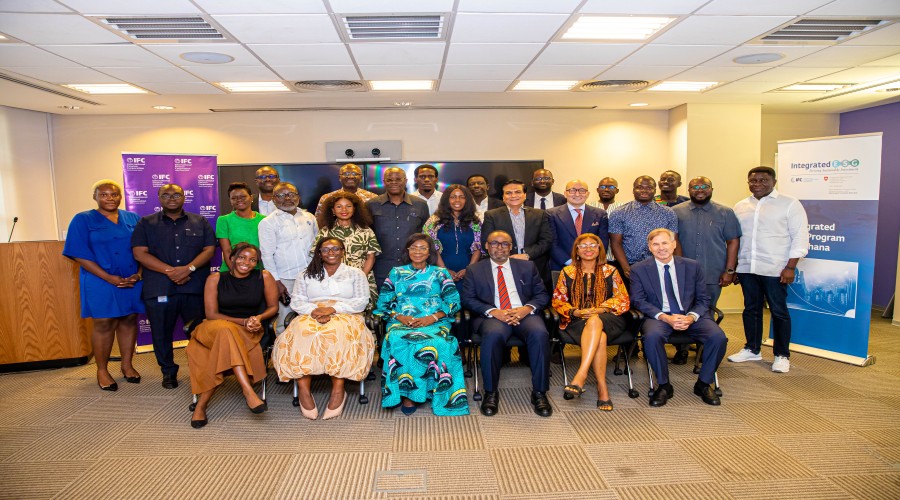
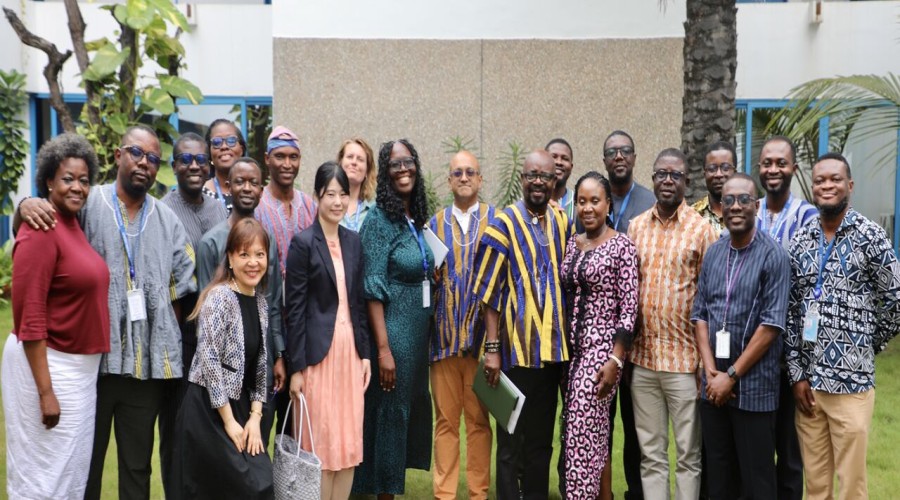
The International Finance Corporation (IFC), a member of the World Bank Group, has convened its third Family Governance Workshop in Ghana, bringing together Ghanaian family-owned business to address one of the most decisive factors for indigenous enterprise resilience – successful generational transitions that secure long-term continuity.
Hosted under IFC’s Integrated Environmental, Social, and Governance
(IESG) Advisory program, with support from the Swiss State Secretariat for
Economic Affairs (SECO), the workshop forms part of an ongoing initiative to
equip family businesses with governance structures for sustainable,
multi-generational growth.

Family-owned enterprises form the backbone of Ghana’s economy,
driving job creation, innovation, and community development. Yet globally, 95
percent of family businesses do not survive past the third generation, often
due to succession planning gaps, weak governance systems, unmanaged growth, and
unresolved family conflicts.
The workshop tackled the core enablers of multigenerational
resilience, including:
Aligning family values with professional
business systems
Preparing next-generation leaders early and
intentionally
Establishing structured conflict-resolution
mechanisms
Building governance frameworks that strengthen
both the family and the enterprise
“Family-owned businesses are not just important to Ghana’s economy.
They are critical to shaping legacies that endure across generations,” Kyle Kelhofer, IFC Senior Country
Manager for Ghana and Liberia said. “Navigating generational transitions
requires preparing next generations to lead, supporting incumbents to let go,
and ensuring succession happens smoothly and intentionally. This improves
operations, preserves wealth, and even enhances access to finance,” he
continued.
Participants represented ranged from first-generation founders to
third-generation leaders. Common themes discussed included succession
anxieties, maintaining entrepreneurial drive, establishing governance
structures that preserve family harmony, and reconciling business needs with
family expectations.
Drawing on international experience, lead facilitator, Moez Miaoui highlighted
the universality of these challenges: “Whether you are working with a first-
or fifth-generation business, the patterns are remarkably similar. Family
governance is fundamental to sustaining enterprises that drive job creation
across Europe, Africa, South Asia, and East Asia,” he explained.
Mr. Miaoui emphasized succession as a two-way process: “Successors
need to convince you they are ready, and you need to convince them they want to
take over. It is a two-way street. Passion cannot be forced; it must be
cultivated and transferred authentically.”
Mr. Kelhofer underscored IFC’s confidence in Ghanaian family
businesses to grow regionally and globally, stating: “Ghana has outstanding
family enterprises that could become major regional players and cross-sector
champions. They reach a point where they can either remain small or scale,
creating opportunities for gowth, investment, and legacy.”

The workshop, the third in the ongoing series, reflects strong
demand from Ghana’s business community. Mr. Kelhofer noted: “Like going to
the gym, governance improvement is something we work on regularly. Feedback
shows participants keep returning, demonstrating the value of these sessions.”
The workshop format combined expert facilitation with peer-to-peer
learning, enabling participants to share experiences, explore practical
strategies for succession planning, conflict resolution, wealth preservation,
and implement governance frameworks that balance family values with business
needs.
Reaffirming IFC’s long-term support, Mr. Kelhofer said: “We
stand ready to provide tailored advisory solutions and investment tools to help
family businesses build stronger, more resilient enterprises for generations to
come. Our mission is to help these businesses achieve beyond what they
currently imagine, potentially becoming leading local corporates and even
global players.”