PIAC urges strategic thinking on energy transition and infrastructure planning in Ghana
Date: 2026-05-19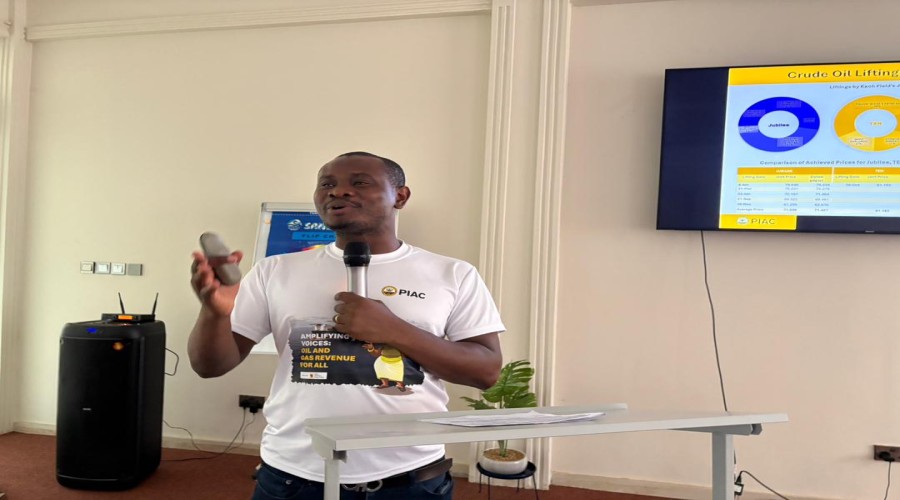
By: Nana Appiah Acquaye
The Public Interest and Accountability
Committee (PIAC) has called for deeper strategic thinking on Ghana’s energy
transition, international energy relations, and long-term infrastructure
planning, amid growing global shifts in technology, mobility, and power
systems.
Speaking during an engagement with selected journalists from the Institute of Financial and Economic Journalists (IFEJ), Parliamentary Press Corp, and PIAC Media in Accra over the weekend, the Chairman of the Technical Sub-Committee of PIAC, Samuel Bekoe, emphasized that many countries are already adjusting their economic and energy systems in response to evolving global realities, particularly the transition away from fossil fuel dependence.

He noted that while some
economies have successfully navigated earlier phases of technological and
energy transitions, others are still adjusting, stressing that the pace and
timing of transition differ significantly across countries depending on capacity,
resources, and policy direction.
Mr Bekoe explained that
historical transitions, such as shifts in food systems and the adoption of
gas-based power generation, demonstrate that energy transformation is typically
gradual and shaped by long-term planning rather than abrupt change.
He cited the evolution from
traditional energy systems to gas-fired power generation as an example of how
countries adopt new technologies over extended periods to improve efficiency
and reduce costs.
According to him, Ghana and
other developing economies must carefully assess how emerging technologies,
including electric vehicles and advanced mobility systems, will reshape energy
consumption patterns and infrastructure needs.

He argued that technological
disruption will continue to redefine energy demand, warning that countries that
fail to anticipate these changes risk implementing policies that quickly become
outdated.
Mr Bekoe further highlighted
that the global shift toward electric mobility will have significant
implications for energy consumption, including reduced household fuel usage
patterns and changes in national demand structures, particularly as electric
vehicles become more widespread and efficient.
He also stressed the
importance of integrating innovation planning into national policy frameworks,
noting that emerging technologies are likely to outpace regulatory systems if
proactive measures are not taken.
The PIAC member urged
policymakers to consider long-term scenarios in which traditional fossil fuel
systems may be significantly disrupted by advances in electric mobility,
renewable energy, and other low-carbon technologies, calling for more adaptive
and forward-looking energy strategies in Ghana.