By: Nana Appiah Acquaye
Zambia and China have
co-chaired a high-level briefing at the United Nations Headquarters in New York
focused on strengthening international cooperation on artificial intelligence
(AI) capacity building, highlighting the infrastructure challenges facing developing
countries and the need for a more inclusive global AI ecosystem.
The briefing, organised
under the framework of the Group of Friends for International Cooperation on AI
Capacity Building, examined the outcomes of the 2026 World Artificial
Intelligence Conference (WAIC) and the High-Level Meeting on Global AI
Governance held in Shanghai, China.
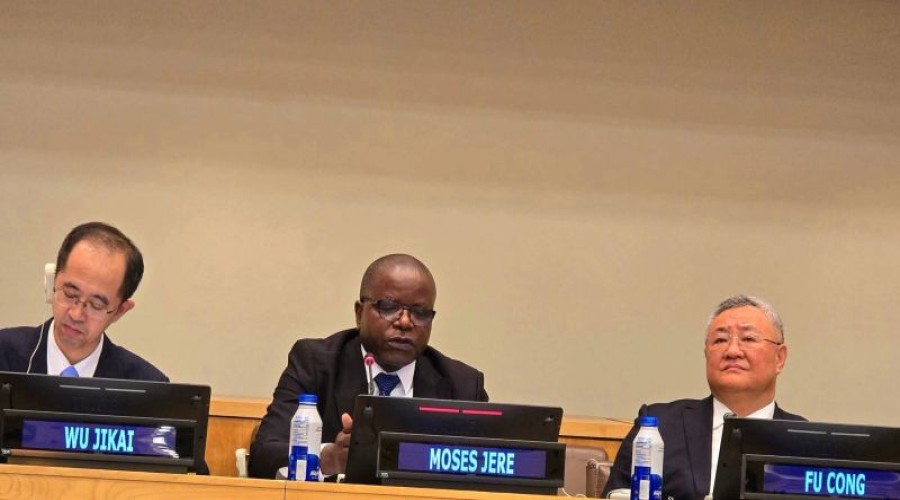
Representing Zambia at the
session was Mission ICT Expert Moses Jere, who emphasised the need for AI
capacity-building initiatives to move beyond discussions and focus on practical
outcomes that deliver measurable impact.
Jere pointed to limited
access to critical AI resources, including computing infrastructure,
high-quality datasets, and interoperable technical standards, as some of the
major barriers affecting many African countries in their efforts to participate
meaningfully in the global AI economy.
He stressed that addressing
these gaps will be essential to ensuring that developing nations are not left
behind as AI technologies continue to reshape economies, public services, and
societies worldwide.
The meeting brought together
Ambassador Fu Cong, Permanent Representative of China to the United Nations,
Mr. Amandeep Singh Gill, the UN Secretary-General’s Envoy on Technology,
representatives from UN development agencies, and delegates from Member States.
Discussions also highlighted
recent steps towards strengthening global AI governance cooperation, including
the signing of the convention establishing worldwide AI cooperation
organisations.
Participants were also given
insights into emerging AI innovations through technology demonstrations and
presentations showcasing advanced solutions developed by universities and
research institutions.