By: Nana
Appiah Acquaye
Kenya has called for
stronger participation by developing countries in shaping international
artificial intelligence (AI) safety and security standards, with President
William Ruto’s Special Envoy on Technology, Ambassador Philip Thigo,
highlighting the need for shared capabilities, independent AI evaluations and
coordinated responses to emerging risks.
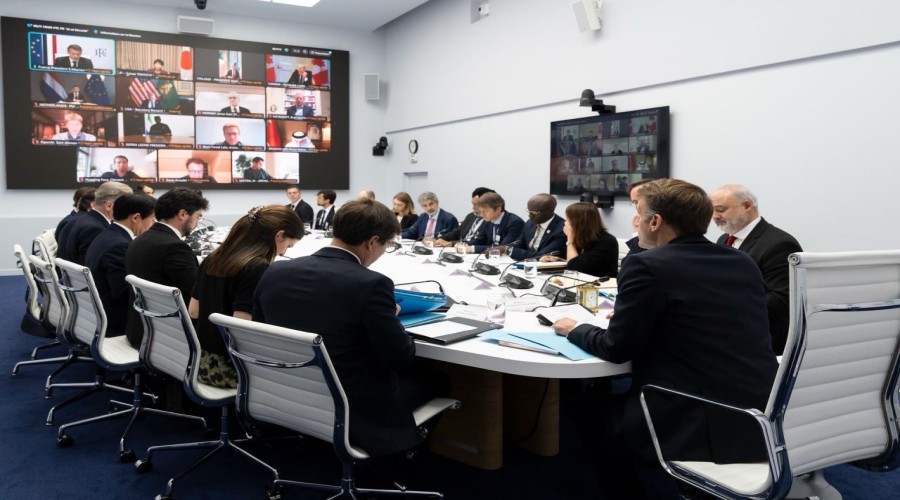
Thigo made the call during a
high-level meeting convened by French President Emmanuel Macron at the Élysée
Palace in Paris, as part of efforts to advance international cooperation on AI
safety and security.
The meeting builds on the
Paris Call for Control of Frontier AI Models, which was endorsed by President
Ruto, and seeks to strengthen cooperation around independent evaluations,
common standards and incident preparedness.
In his intervention, Thigo
reiterated President Ruto’s priorities from the AI Middle Powers dialogue at
the 81st United Nations General Assembly (UNGA81), particularly the need to
advance technological agency, shared capabilities and meaningful participation
of the Global South in global AI governance.
He identified three priority
areas for international cooperation, beginning with the development of
independent AI evaluation capabilities in the Global South.
Thigo stressed the
importance of building scientific and institutional capacity to assess AI
systems, including evaluations that account for African languages and local
contexts. He also pointed to cooperation through the Network of AI Measurement,
Evaluation and Science (NAAIMES) as part of efforts to strengthen these
capabilities.
On AI security and incident
preparedness, he called for stronger early warning mechanisms, incident
reporting, information-sharing and coordinated responses to emerging risks
associated with frontier AI models.
He further emphasised the
need to expand access to computing resources, technical talent and AI
evaluation infrastructure, while ensuring developing countries have a
meaningful role in shaping international standards.
The priorities reflect
Kenya’s position that global AI safety and security frameworks should be
informed by broader international participation, particularly from countries in
the Global South that risk being excluded from decisions shaping the development
and governance of advanced AI systems.
Thigo expressed appreciation
to President Macron and the French Government for convening the meeting,
describing the engagement as an important step towards advancing practical
international cooperation on AI safety and security.