By: Nana
Appiah Acquaye
Ghana’s geospatial industry
must demonstrate its readiness to support the country’s emerging space
ambitions as the government moves towards establishing the Ghana Space Agency,
Managing Director of BigData Ghana Limited, Henry Kwamena Baffoe, has said.
He said the downstream space
sector, particularly Earth observation, satellite data, geographic information
systems and geospatial intelligence, would be critical to ensuring that the
proposed agency delivers practical economic and developmental benefits.
Speaking at the inaugural
Africa Geospatial Leadership Forum (AGLF 2026) in Accra on Wednesday, November
11, 2026, Mr Baffoe described the forum as a deliberate prelude to the
establishment of the Ghana Space Agency, bringing together government, industry,
finance and academia to demonstrate existing capabilities and identify
investment opportunities.
“By bringing the Earth
observation downstream community together now, government, industry, finance
and academia, we are doing three things that the Agency will need from day one.
We are demonstrating real demand across sectors, from land and mining to agriculture,
climate, security, finance and cities. We are showing that there is already
local capability and local enterprise to build on, not a blank page. And we are
surfacing the investment case, the pilots and the partnerships that make a
space agency relevant to the economy rather than an institution in search of a
purpose,” he said.
Mr Baffoe said the approval
by Cabinet for the establishment of the Ghana Space Agency was a landmark
decision that positioned the country among African nations seeking to build
sovereign capabilities in space and its applications.
He, however, stressed that
establishing a space agency required more than institutional structures, noting
that the value of space technology would ultimately be measured by its
applications on the ground.
“But a space agency is not
built in a single step, and it does not begin with rockets. The value that
reaches an ordinary citizen, a farmer, a bank, a Minister or a commander, comes
from what we call the downstream of the space sector. It is Earth observation
and geospatial intelligence. It is the data, the analytics and the decisions
that satellites make possible on the ground,” he said.
He identified this
downstream segment as central to the work of BigData Ghana and other
organisations participating in the forum, emphasising the need to strengthen
the ecosystem before the new agency becomes operational.
According to him, the
country's ability to benefit from its emerging space capabilities would depend
on how effectively institutions integrate spatial intelligence into national
planning, public policy and decision-making.
“Our conversations,
therefore, must move beyond maps and demonstrations,” he said, outlining three
priorities for the industry: leadership and institutional adoption, innovation
and economic value, and collaboration and partnerships.
On institutional adoption,
Mr Baffoe called for spatial intelligence to become a normal part of national
planning and public policy, informing decisions across government and other
sectors.
He also urged stakeholders
to move beyond technology demonstrations towards deployed solutions, viable
enterprises and investment opportunities that could attract capital and create
jobs.
On partnerships, he
highlighted the importance of connecting government, industry, academia,
financial institutions and development partners while aligning their activities
with the proposed Ghana Space Agency.
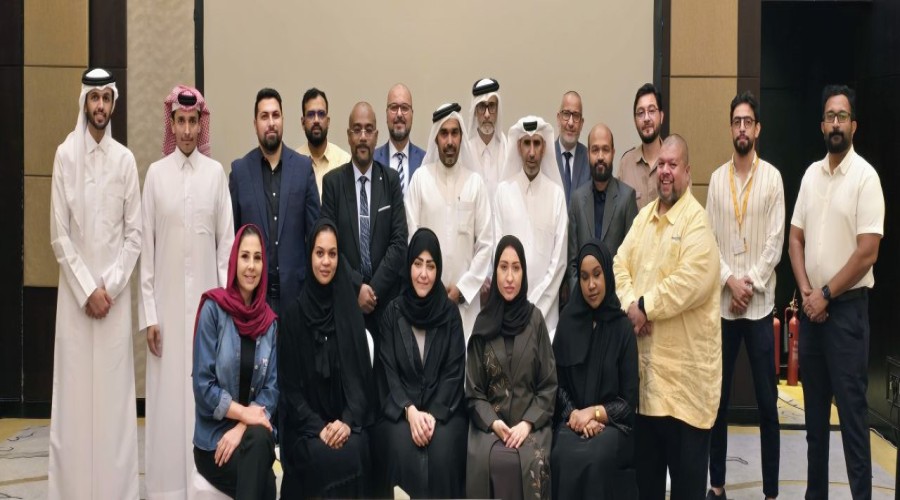
The two-day forum, held at
The Palms by Eagles in Accra, brought together government representatives,
industry leaders, technology companies, researchers, investors and development
partners to examine the role of geospatial intelligence in Africa's development.