By: Nana
Appiah Acquaye
Climate adaptation efforts
in Africa require sustained investment in local capacities, strong
institutions, trusted partnerships and predictable financing to ensure
communities continue benefiting after individual projects and funding cycles
end, climate experts and government representatives have said at COP31.
The call was made during a
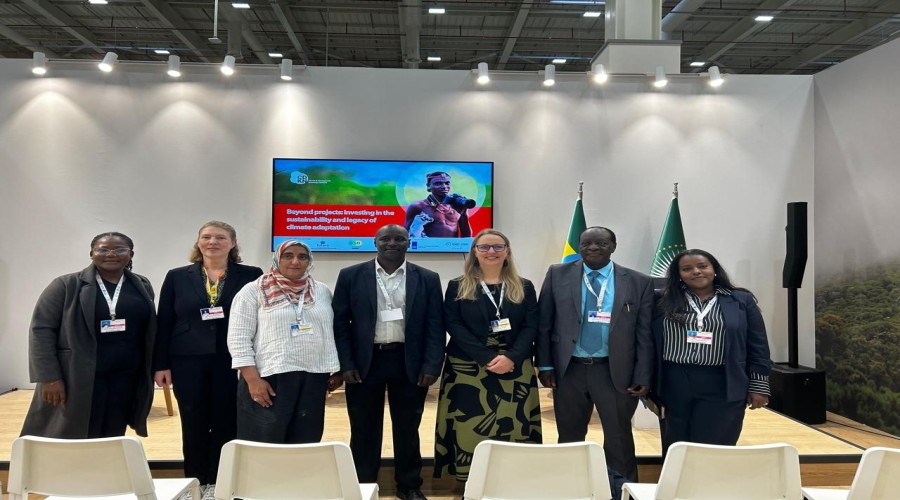
discussion titled “Beyond Projects: Investing in the Sustainability and Legacy
of Climate Adaptation”, hosted by SouthSouthNorth and the Climate and
Development Knowledge Network (CDKN) at the Ethiopian Pavilion during the
ongoing COP31 climate conference.
The discussion brought
together government leaders, researchers and practitioners from across Africa
to examine how climate adaptation initiatives can deliver lasting benefits
beyond the lifespan of individual programmes.
Opening the session, CDKN
Programme Lead Lisa McNamara and SouthSouthNorth Director Dr Shehnaaz Moosa
drew on more than 15 years of CDKN's experience to highlight the factors that
enable adaptation efforts to endure. These include patient and predictable
financing, strong local capacities and institutions, trusted relationships and
networks, and locally led learning and decision-making.
Participants shared examples
from Kenya, Ethiopia and Ghana, demonstrating how institutional support, local
partnerships and community-led approaches can help sustain climate action.
In Kenya, Vihiga County
Governor Dr Wilber Ottichilo highlighted the importance of institutionalising
climate adaptation financing. He said county governments had allocated between
2 and 3 per cent of their budgets to climate adaptation, helping to sustain
local initiatives and attract additional investment.
In Ethiopia, Hanna Abebe
Demissie of the Ministry of National Strategy outlined how gender equality and
social inclusion guidelines, indicators and institutional capacities developed
with CDKN support were being embedded in government systems to ensure the work
continues beyond the programme.
Ghana's experience was
presented by CDKN's Valerie Kplorm Aku Nutakor, who highlighted how
partnerships, youth networks and knowledge exchange were helping local climate
leaders gain recognition, access opportunities and influence decision-making.
She explained how these
efforts were building an ecosystem of climate action that extends beyond
individual interventions.
Charles Tonui of the Africa
Research and Impact Network (ARIN) also shared insights from the Locally Led
Adaptation Metrics (LAMA) project, which explores how community-led monitoring
and evaluation can strengthen local ownership of climate adaptation.
The initiative seeks to
ensure community priorities are incorporated into government planning,
financing and decision-making processes.