By: Kanto
Kai Okanta
Libya has opened its Third
Training Programme on Domesticating Agenda 2063 through artificial intelligence
(AI), as the country seeks to strengthen national reporting, data governance
and evidence-based decision-making to accelerate the implementation of the
African Union’s development blueprint.
The programme, launched in
Tripoli this week, brings together data governance, alignment, analysis and
national reporting, with a focus on translating continental commitments into
measurable national outcomes.
Libya recorded an overall
performance of 84% in its national Agenda 2063 implementation report, providing
a foundation for the next phase of its implementation efforts.
The priority, according to
the African Union Development Agency-NEPAD (AUDA-NEPAD), is now to turn plans
into delivery by making every figure verifiable, accelerating reporting and
ensuring that decisions are informed by reliable evidence.
Opening the programme, Dr.
Ziad Elhajjaji, Minister of State for Digital Economy and Artificial
Intelligence, highlighted the transformative potential of responsible AI,
trusted data and human judgement in helping institutions plan better, report
faster and serve citizens more effectively.
Dr. Mohamed Al-Fadil Gubran,
Chairman of Libya’s Permanent Committee for Monitoring and Implementing Agenda
2063, described the country's 84% performance as “a milestone not a finish
line” and called for stronger national systems and capacity to ensure that
every number can be verified, explained and trusted.
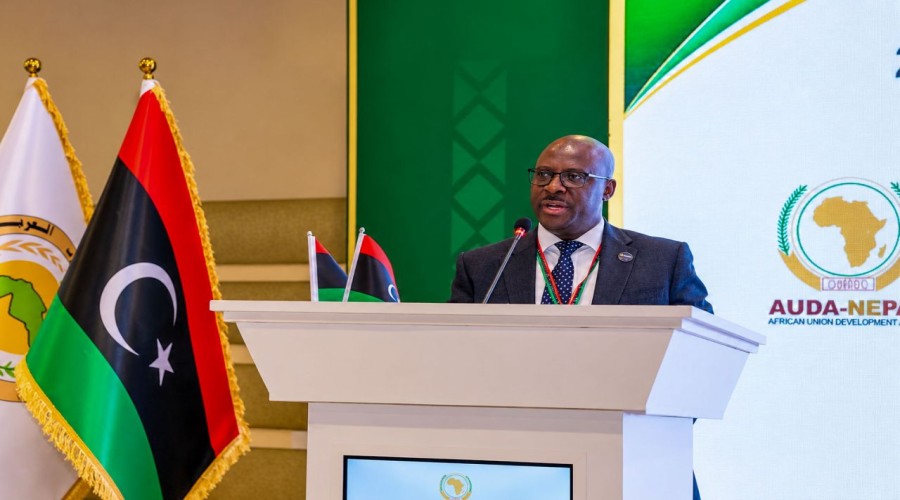
Representing AUDA-NEPAD,
Director of Operations Ola Ehinmoro reaffirmed the Agency’s commitment to
supporting Libya beyond alignment and into delivery.
He emphasised the importance
of capable institutions and reliable data in translating continental
commitments into results that people can see and feel in their daily lives.
The training programme is
using alignment maps, AI-assisted reports and live dashboards to strengthen
Libya's capacity to monitor and report progress under Agenda 2063.