By: Nana
Appiah Acquaye
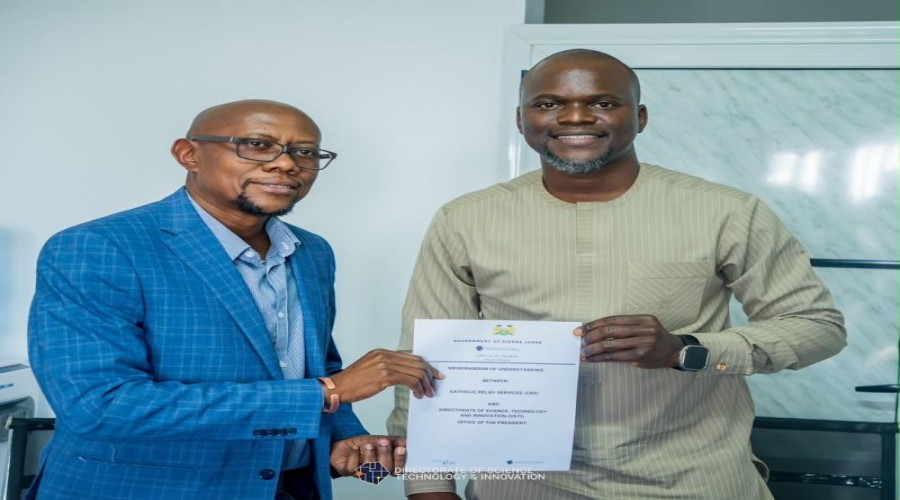
Sierra Leone’s Directorate
of Science, Technology and Innovation (DSTI) and Catholic Relief Services (CRS)
have signed of a Memorandum of Understanding (MoU), aimed at strengthening the
use of digital technologies for national development.
The agreement, announced by
the Ministry of Communication, Technology and Innovation, establishes a
strategic partnership aimed at expanding the use of geospatial technologies to
support sustainable development, spatial planning, and disaster risk management
across the country.
Under the partnership, the
two organizations will collaborate to enhance the application of mapping
technologies and location-based data to improve planning, decision-making, and
the delivery of public services.
Officials said the
initiative is expected to strengthen the country's capacity to manage land
resources more effectively, support evidence-based urban and regional planning,
and improve preparedness and response to natural disasters and other
emergencies.
The collaboration also seeks
to leverage geospatial data to support broader national development priorities
by enabling government institutions and development partners to make more
informed policy and investment decisions.
The Ministry of
Communication, Technology and Innovation noted that the partnership aligns with
Sierra Leone's digital transformation agenda, which promotes the adoption of
innovative technologies to improve governance, strengthen resilience, and
accelerate socio-economic development.
By combining technical
expertise and digital innovation, the Directorate of Science, Technology and
Innovation and Catholic Relief Services aim to develop sustainable geospatial
solutions that will contribute to more efficient resource management and enhance
the country's ability to respond to environmental and humanitarian challenges.
The agreement reflects
Sierra Leone's continued efforts to integrate advanced digital technologies
into national planning and public service delivery while fostering partnerships
that support long-term sustainable development.