By:
Nana Appiah Acquaye
The
United Nations Office for Outer Space Affairs (United Nations Office for Outer
Space Affairs) has called for more forward-looking and people-centered space
policymaking, emphasizing the need for global institutions to adapt to a
rapidly evolving commercial and technological space environment.
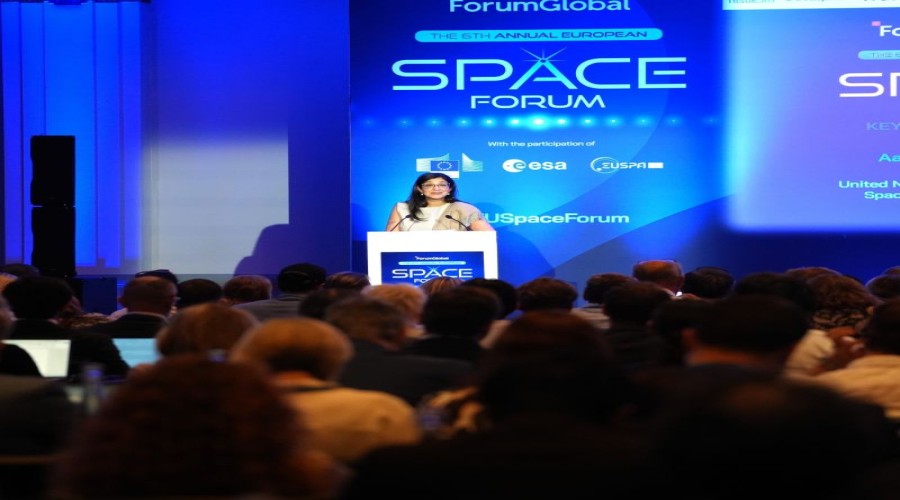
Speaking
at the 6th Annual European Space Forum, Director Aarti Holla-Maini delivered a
keynote address alongside senior representatives from the European Commission
and the European Space Agency (European Space Agency), focusing on how the
global space sector has transformed over the past five years.
She
noted that earlier policy discussions were largely centered on flagship
European programmes such as Galileo satellite navigation system and Copernicus
Earth observation programme, but that the sector is now defined by a broader
ecosystem of commercial operators, expanding satellite constellations and
accelerating innovation cycles.
According
to UNOOSA, this shift requires policymakers to ensure that space-based
technologies deliver tangible benefits across key development areas, including
climate action, sustainable agriculture, disaster risk management and digital
connectivity. The organization emphasized that space data is already capable of
supporting solutions such as illegal fishing monitoring and satellite broadband
expansion, but requires stronger integration into national and regional policy
frameworks.
A
key theme of the address was space sustainability, with the Director stressing
that sustainable practices in orbit should not be viewed as a regulatory burden
but as a fundamental business imperative. She referenced the United Nations
Long-term Sustainability Guidelines for Outer Space Activities, adopted in
2019, as a critical framework for ensuring the safe, secure and long-term
usability of outer space.
The
forum discussions reinforced UNOOSA’s position that space policy is ultimately
about improving lives on Earth, and that the next phase of space development
must focus on ensuring that space-derived benefits are widely accessible,
responsibly managed and aligned with global sustainable development priorities.