By: Nana Appiah Acquaye
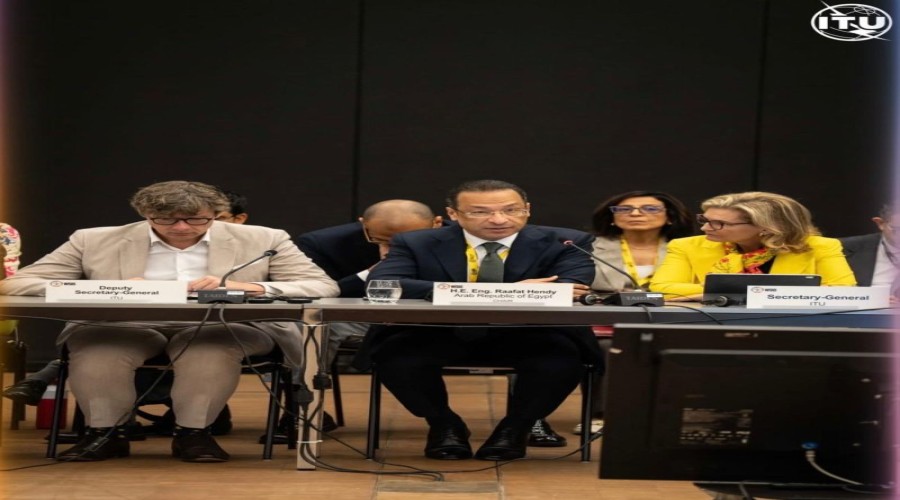
Egypt's Minister of Communications and
Information Technology, Eng. Raafat Hendy, together with International
Telecommunication Union (ITU) Secretary-General Doreen Bogdan-Martin, chaired a
high-level ministerial roundtable during the World Summit on the Information
Society (WSIS) Forum 2026, bringing together ministers and deputy ministers
from across the world to discuss priorities for the next phase of global
digital development.
Held as part of the WSIS
Forum, which is being chaired by Egypt in Geneva, the roundtable provided
member states with an opportunity to review national digital priorities,
exchange policy experiences and identify areas for collective action.
Discussions were organised
around three key themes: artificial intelligence strategies and policies,
digital transformation through public digital infrastructure and digital public
goods, and expanding digital infrastructure and inclusion to bridge connectivity
gaps.
In his remarks, Hendy said
the discussions reflected a wide range of ideas and experiences while
demonstrating the international community's commitment to building a more
inclusive, secure and human-centred digital future.
He said the outcomes of the
ministerial dialogue would help shape the next phase of digital development by
focusing on three priorities: harnessing artificial intelligence as a driver of
economic and social opportunities, accelerating digital transformation through
public digital infrastructure and public digital goods, and strengthening
digital infrastructure and inclusion.
Hendy highlighted Egypt's
continued investment in building national artificial intelligence capabilities
and reaffirmed the country's commitment to sharing its expertise while learning
from international best practices. He noted that AI is already improving
healthcare, education, agriculture and public services globally and stressed
the need to expand access to AI skills, open models, training data and
computing capacity to ensure broader participation in the digital economy.
The minister also emphasised
the importance of open standards, interoperable systems and trusted governance
frameworks in delivering accessible digital services. He pointed to Egypt's
progress in developing digital identity systems, digital payment platforms and
open-source solutions that support rural communities, women, youth and small
businesses.
Addressing digital
connectivity, Hendy acknowledged that infrastructure gaps remain a major
challenge but said they also present opportunities for innovation and
investment. He noted that Egypt continues to expand broadband coverage, improve
rural connectivity and strengthen digital skills programmes, particularly for
women and young people, while calling for innovative financing mechanisms to
extend infrastructure to underserved communities.
He said the discussions at
the forum demonstrated a shared global vision of digital transformation that
empowers individuals and strengthens economies, reaffirming Egypt's commitment
to working with international partners to ensure that artificial intelligence,
digital public infrastructure and digital connectivity become drivers of
inclusive development.
The minister concluded by
calling for continued international cooperation to achieve digital inclusion
and meaningful connectivity for all as countries implement the next phase of
the WSIS agenda.