By: Nana
Appiah Acquaye
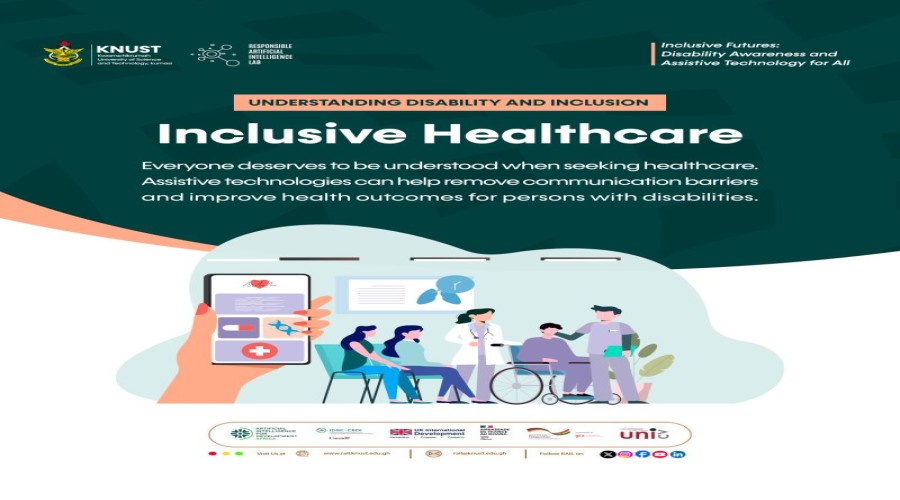
The Responsible AI Lab
(RAIL) at Kwame Nkrumah University of Science and Technology (KNUST) is
developing inclusive assistive technologies aimed at addressing communication
barriers faced by persons with disabilities when accessing healthcare in Ghana.
The Lab says its work is
focused on ensuring that every Ghanaian, including persons with disabilities,
can communicate effectively when seeking medical care and receive quality
healthcare without facing unnecessary barriers.
Among the technologies being
developed is SignTalk, an assistive system that translates Ghanaian Sign
Language between patients and healthcare professionals through an avatar-based
interpretation system.
RAIL is also developing
SignConnect Ghana, a mobile application designed to enable deaf individuals to
make phone calls independently, as part of efforts to improve communication and
digital accessibility.
Other innovations include
I-See, an AI-powered smart white cane, and I-Hear, an AI-driven hearing aid.
The Lab is also working on artificial intelligence solutions for rare disease
diagnosis and affordable medical imaging.
The initiatives form part of
RAIL’s Inclusive Futures campaign, through which the Lab says it is working
directly with the communities it seeks to serve to develop assistive
technologies.
RAIL said designing
assistive technologies with and for people with disabilities can help remove
barriers, improve health outcomes and support more inclusive access to
healthcare.