By:
Robert Kwaku Annor
The Dean of the Faculty of
Electrical and Computer Engineering at the Kwame Nkrumah University of Science
and Technology (KNUST), Prof. Emmanuel Assuming Frimpong, has challenged
students to move beyond consuming technology for entertainment and contribute
to its development.
He gave the advice at a
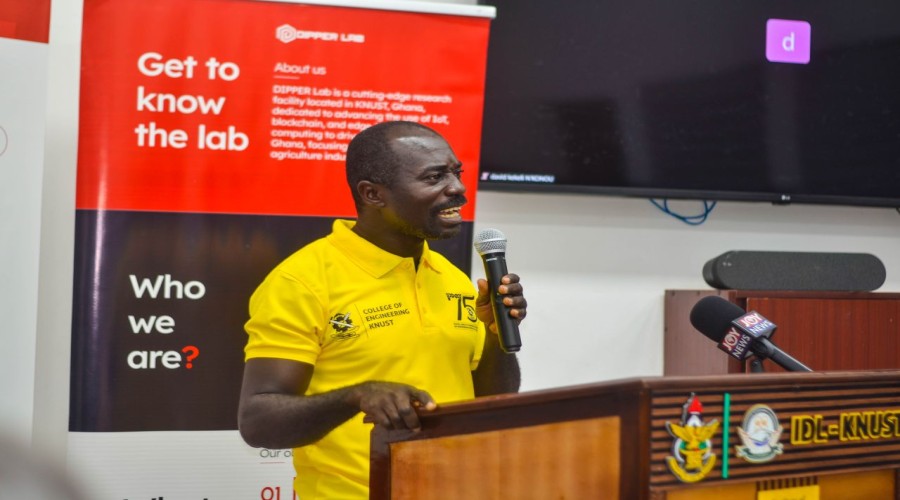
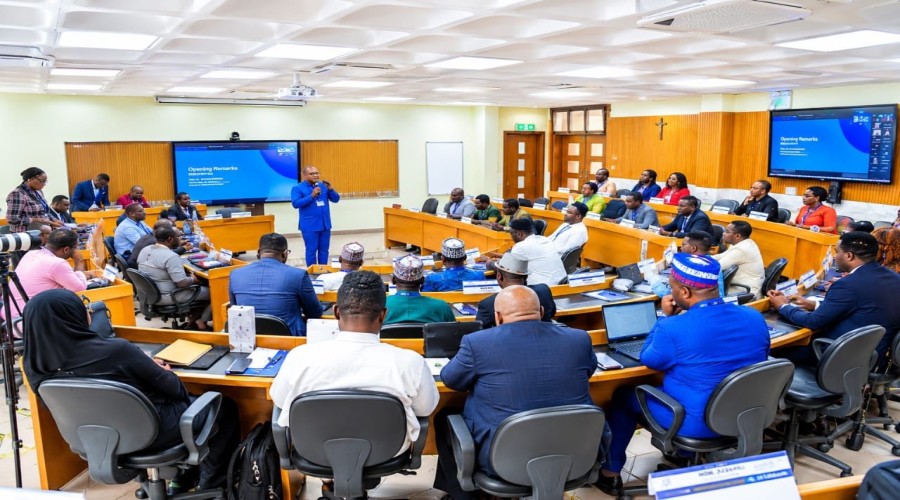
capacity-building workshop organised by DIPPER Lab under the NKABOM Project,
funded by the French Embassy in Ghana, to explore the application of Artificial
Intelligence (AI) and materials science in developing sustainable energy
technologies.
Speaking on the importance
of interdisciplinary research in AI and materials science, Prof. Frimpong urged
students to “take advantage of opportunities to use AI to accelerate research
and contribute to technological advancement”.
The Head of the Department
of Materials and Metallurgical Engineering at KNUST, Prof. Emmanuel Gikunoo,
highlighted the role of materials engineering in sustainable energy solutions
and the need to build research capacity in the field.
He said the workshop would
help prepare the next generation of scientists and engineers to take research
innovations from the laboratory to industrial production.
“The intersection of AI and
materials science offers you a pathway to global relevance and impact,” he
said.
Prof. Gikunoo called for
investment in high-performance computing, advanced characterisation facilities
and sustained international mentorship to support research and innovation.
The workshop also featured
presentations on the application of AI and machine learning in materials
research.
Dr. Bennetta Koomson, a
Senior Lecturer in the Department of Materials and Metallurgical Engineering at
KNUST and Principal Investigator at the WE-Africa Membrane Knowledge Hub,
presented on the application of AI and machine learning in extractive metallurgy.
Her presentation explored
how these computational techniques can be applied to research challenges in
materials science beyond solar energy.
Prof. Kwadwo Mensah-Darkwa,
a Senior Lecturer in the Department of Materials and Metallurgical Engineering
at KNUST, presented on “AI/ML-Driven Simulation and Experimental Optimization
of Benzene Dicarboximide Hydrochloride-Modified Perovskite Solar Cells for
Enhanced Efficiency and Long-Term Stability.”