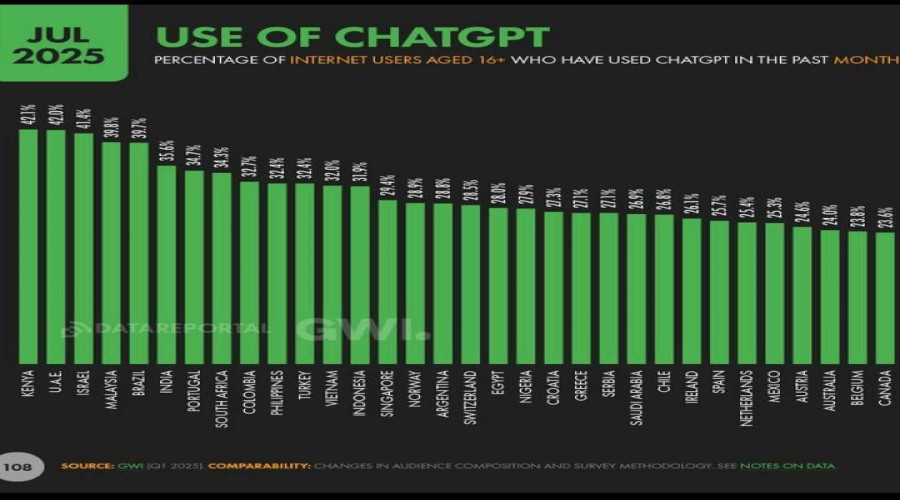
Kenya has
emerged as the world leader in ChatGPT usage, leaving African peers South
Africa, Egypt and Nigeria trailing behind in the latest global technology
adoption rankings. The July 2025 DataReportal Global Statshot reveals a
striking continental divide, with Kenya's 42.1% adoption rate among internet
users aged 16+ far exceeding South Africa's 15.3%, Egypt's 9.8% and Nigeria's
8.2%.
Kenya's
remarkable lead in artificial intelligence adoption reflects its unique digital
landscape, where widespread mobile internet access, strong English proficiency
and a vibrant startup culture have created ideal conditions for AI tools to
flourish. The country's young, tech-savvy population has embraced ChatGPT for
practical daily applications ranging from business operations to education and
creative projects.
South Africa
maintains a respectable position as eighth globally, benefiting from its
established corporate sector's adoption of AI solutions. Egypt and Nigeria's
lower rankings suggest their larger populations have yet to achieve Kenya's
level of grassroots AI integration, despite their significant tech hubs and
digital economies.
Technology
analysts highlight Kenya's comprehensive digital ecosystem as the key
differentiator. The country's 92% smartphone penetration, government-supported
digital initiatives and innovative Silicon Savannah community have combined to
create Africa's most fertile ground for AI adoption. This achievement positions
Kenya not just as a continental leader but as a global case study in how
emerging economies can rapidly adopt and benefit from cutting-edge
technologies.
The widening
gap in AI usage between Kenya and other major African economies may have
significant implications for regional competitiveness. As artificial
intelligence becomes increasingly embedded in economic productivity and
innovation, Kenya's early lead could translate into long-term advantages in
attracting tech investment and developing homegrown AI solutions tailored to
African contexts. The full findings underscore how strategic digital
infrastructure development and tech-savvy populations can propel nations ahead
in the global AI revolution.
By: Nana Appiah Acquaye