CCRS and African Union Commission move to strengthen climate cooperation
Date: 2026-02-16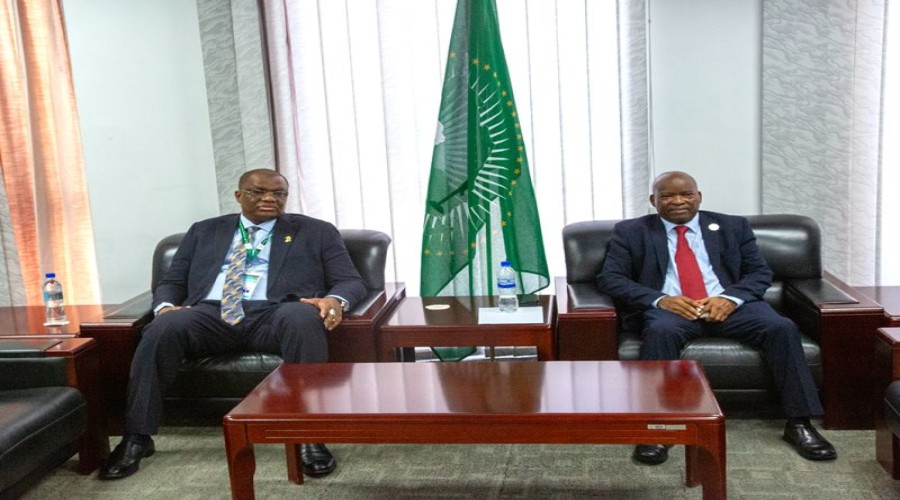
By: Nana Appiah Acquaye
The
Commission Climat pour la Région du Sahel (CCRS) and the African Union
Commission (AUC) have advanced discussions toward a formal partnership aimed at
reinforcing climate action and sustainable development efforts across the Sahel
region.
The
development follows a working session held on the margins of the thirty-ninth
Ordinary Session of the Assembly of Heads of State and Government of the
African Union. His Excellency Mr. Issifi Boureima, Executive Secretary of CCRS,
met with His Excellency Mr. Moses Vilakati, Commissioner for Agriculture, Rural
Development, Blue Economy and Sustainable Environment at the AUC.

During
the meeting, both parties reviewed their existing cooperation framework and
agreed to strengthen institutional collaboration through the forthcoming
signing of a partnership agreement. The initiative is intended to enhance
coordination between continental and regional programmes, with a focus on
accelerating the implementation of climate adaptation, resilience, and
sustainable development policies in the Sahel.
Commissioner
Vilakati commended the leadership of the CCRS Executive Secretary, noting the
Commission’s strategic importance within Africa’s climate governance
architecture. He emphasised CCRS’s regional mandate as a critical mechanism for
aligning adaptation and resilience strategies tailored to the unique
environmental and socio-economic challenges of Sahelian countries.

Both
institutions expressed a shared commitment to fostering greater synergy and
policy coherence to ensure more effective responses to climate-related risks in
the region. Technical teams have been tasked with finalising preparations for
the partnership agreement and identifying priority actions for joint
implementation.
Mr.
Boureima welcomed the outcomes of the discussions, describing the engagement as
a constructive step toward strengthening collaborative climate governance and
sustainable development interventions in the Sahel.