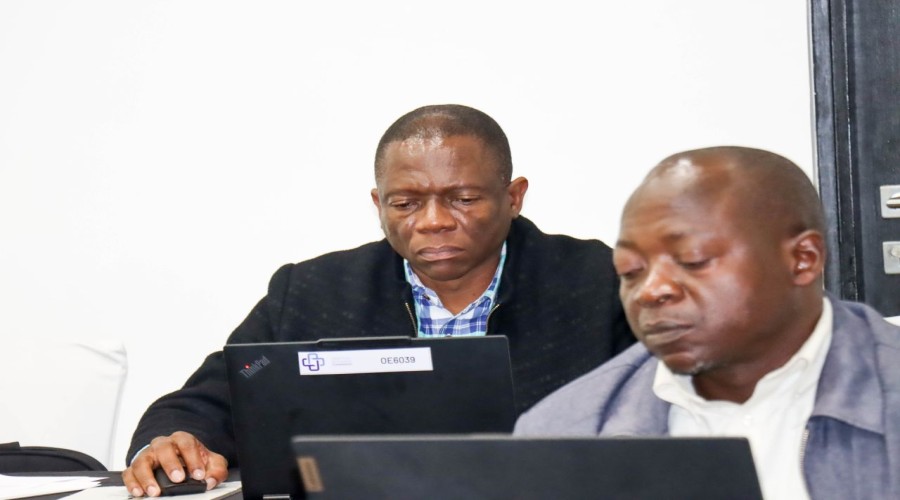
RCMRD trains Malawi health officials in advanced GIS and AI for disease response
Date: 2026-04-28
By: Robert Kwaku Annor
The
Regional Centre for Mapping of Resources for Development is conducting an
advanced Geographic Information Systems (GIS) training programme aimed at
strengthening data-driven decision-making within Malawi’s health sector.
The
Phase 2 training, currently underway, is equipping officials from the Ministry
of Health Malawi with skills in advanced spatial analysis, predictive modelling
using artificial intelligence, and the integration of GIS tools with health
information systems such as DHIS2.

The
initiative is designed to address a critical gap in health systems, where large
volumes of data are often underutilised due to limited analytical capacity. By
enhancing technical capabilities, the programme aims to enable faster, more
precise responses to disease outbreaks and public health challenges.
A
key component of the training includes the use of the Disease Risk Matrix, a
tool that supports epidemiologists in estimating treatment costs, evaluating
the economic impact of disease on productivity, and quantifying losses
associated with mortality.
The
programme underscores the growing role of geospatial technologies and AI in
transforming health data into actionable intelligence, supporting more
effective planning, resource allocation, and emergency response.