Meta highlights AI and digital platforms driving Türkiye’s expanding digital economy
Date: 2026-05-19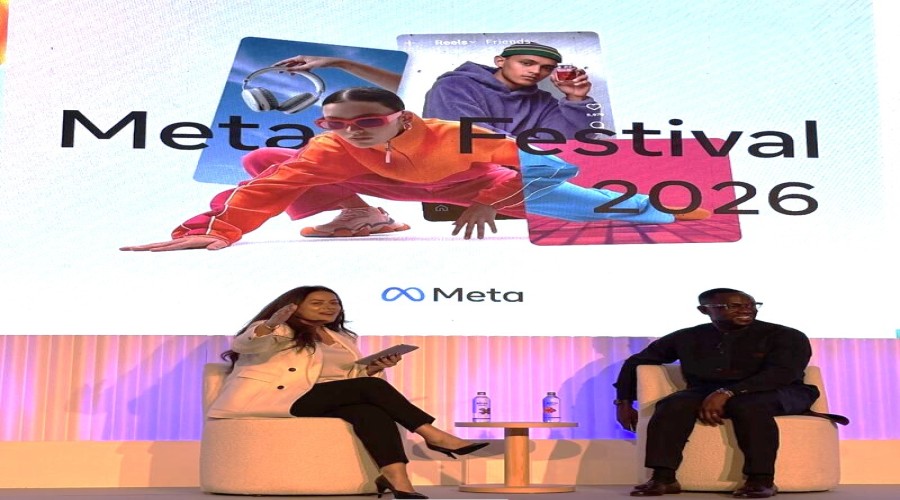
By: Nana Appiah Acquaye
Meta
has highlighted the growing economic impact of its platforms and artificial
intelligence tools in Türkiye, noting that the country’s digital economy is
experiencing strong expansion driven by increased adoption of social media and
digital commerce solutions.
This
was shared by Kojo Boakye, Vice President for Public Policy covering Africa,
the Middle East, and Türkiye at Meta, during the Meta Festival held in
Istanbul, which brought together more than 550 business leaders, government
officials, and innovators.
Speaking
at the event, Boakye participated in a fireside chat on “Rewriting Tomorrow
with AI,” where discussions focused on how businesses can leverage artificial
intelligence to remain competitive and adapt to emerging digital trends.
 He
also referenced new research by Public First, which examined the economic
contribution of Meta’s platforms across Türkiye, including Facebook, Instagram,
WhatsApp, and Meta AI. The findings highlighted the role of these platforms in
supporting businesses of all sizes and expanding access to global markets.
He
also referenced new research by Public First, which examined the economic
contribution of Meta’s platforms across Türkiye, including Facebook, Instagram,
WhatsApp, and Meta AI. The findings highlighted the role of these platforms in
supporting businesses of all sizes and expanding access to global markets.
According
to the data shared, Türkiye’s digital economy is currently valued at
approximately ₺1.7 trillion, representing about 4 percent of GDP, and is
projected to more than double to ₺4.3 trillion by 2035.
The
report indicated that more than half of Turkish small business owners rely on
Facebook and Instagram as their primary channels for customer acquisition and
sales, while 73 percent of online adults in Türkiye have purchased from local
businesses discovered through Meta platforms.

It further noted that WhatsApp generated approximately ₺220 billion in economic value in 2025 by reducing communication costs and improving access to markets for businesses.
Boakye
emphasized that Türkiye’s digital ecosystem is showing strong momentum, with
growing interest in artificial intelligence and increasing use of Meta’s tools
by local companies and developers, including applications built on Llama
models.
He
stated that Meta’s platforms are playing a significant role in supporting
entrepreneurs, creators, and small businesses by lowering barriers to entry and
enabling access to wider markets, contributing to what he described as a
rapidly evolving digital economy in Türkiye.