Nigeria advances digital broadcasting future ahead of 2026 Digital Switch Over launch
Date: 2026-05-26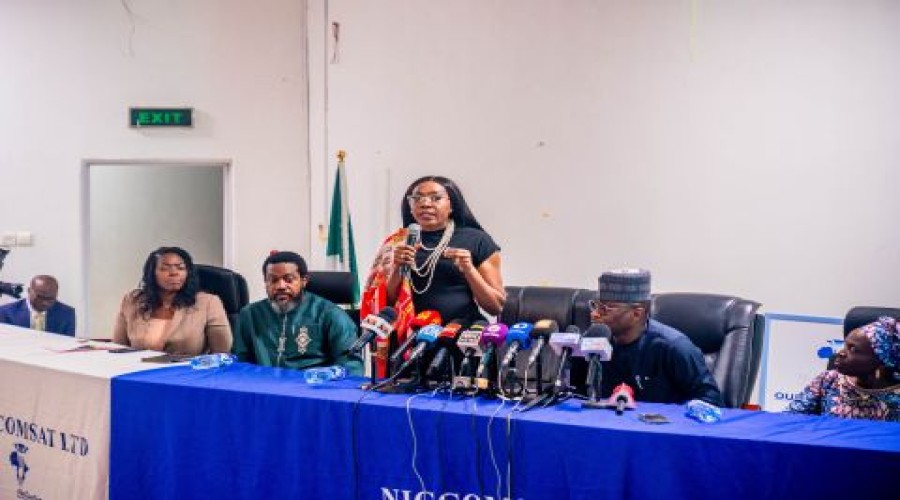
By: Nana Appiah Acquaye
The Chief Executive Officer
of the Nigeria Communications Satellite Limited (NIGCOMSAT), Jane
Egerton-Idehen has announced that Nigeria is accelerating preparations toward
its digital broadcasting transformation ahead of the June 17, 2026 Digital
Switch Over (DSO) project launch.
The announcement was made
during a joint press conference involving the National Broadcasting Commission
(NBC) and Nigerian Communications Satellite Limited, where management teams
outlined progress on the country’s digital broadcasting infrastructure and
nationwide connectivity plans.

According to Egerton-Idehen,
the initiative reflects Nigeria’s broader commitment to building a sovereign
digital broadcasting ecosystem powered by space-based infrastructure designed
to improve information access, media inclusion and national connectivity.
Addressing public concerns,
she confirmed that the NigComSat-1R satellite, launched in 2011, remains
operational and is expected to continue service delivery through 2028,
supported by advanced life-extension and inclined-orbit operations.
She also clarified that
millions of existing DVB-S2 decoders currently in Nigerian households will
remain compatible with FreeTV signals, eliminating the need for expensive new
equipment for users.
On coverage reliability, she
noted that the system has been engineered to ensure strong nationwide signal
reach, including coastal and rain-prone regions, addressing long-standing
concerns about broadcast consistency.

Regarding potential delays
in the planned NigComSat-2A and NigComSat-2B satellites, the management
confirmed that contingency arrangements with commercial satellite providers are
in place to guarantee uninterrupted FreeTV access for Nigerian audiences.
The briefing highlighted
that the DSO programme extends beyond television broadcasting to broader
national development goals, including digital inclusion, expansion of access to
information, protection of orbital assets and strengthening confidence in Africa’s
space technology capabilities.
Officials emphasized that
the initiative is expected to create new opportunities for young professionals
in technology, media, engineering and policy, while positioning Nigeria as a
key player in Africa’s evolving space and digital communications sector.