RAIL calls for community support to sustain robotics clubs across Ghana
Date: 2026-05-26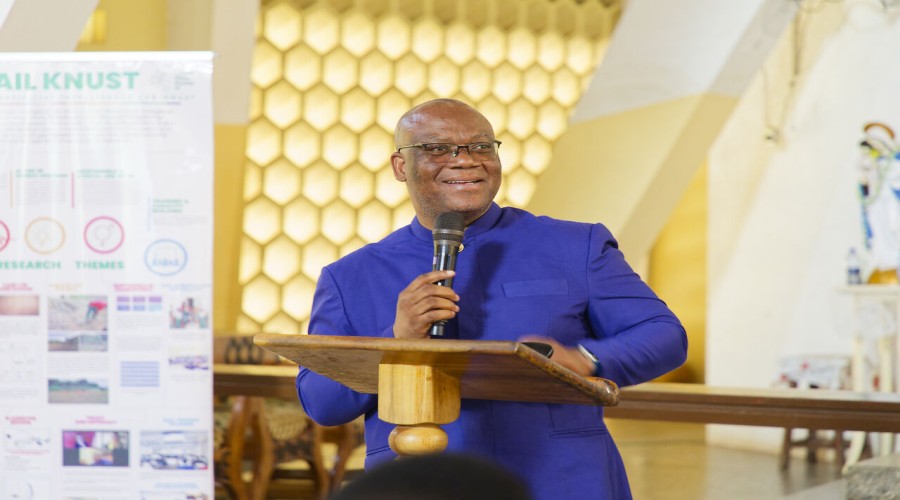
By: Robert Kwaku Annor
The Responsible AI Lab has
called for stronger community involvement and local resource mobilisation to
sustain and expand its Robotics Club Initiative across Ghana and beyond.
Speaking during a programme
focused on artificial intelligence and education, the Director of the Office of Grant and
Reserach of the Kwame Nkrumah University of Science and Technology (KNUST), Jerry
John Kponyo stressed the need for what he described as an “all-hands-on-deck
approach” to ensure the long-term sustainability of the initiative.

Prof. Kponyo urged mentors
to develop sustainability plans tailored to their schools and communities,
including Parent-Teacher Association fundraising drives and awareness
campaigns, noting that external funding alone would not be sufficient to
maintain the robotics clubs over time.
He emphasized the importance
of local ownership, grassroots engagement and community participation in
strengthening robotics and AI education initiatives for young learners.
The programme also featured
updates on the expansion of RAIL activities beyond Ghana. Sónia Semedo,
speaking on behalf of Arlindo Veiga, provided an overview of activities
undertaken by the RAIL Robotics Club in Cabo Verde.
According to Semedo, a RAIL
Cabo Verde workshop was organized following Dr. Veiga’s visit to Ghana, while
representatives from the Women in Technology initiative also travelled to Cabo
Verde to strengthen collaboration between institutions.

A panel discussion held
during the programme focused on building a collective vision for AI in
education that supports teachers, empowers learners and promotes inclusion
within Ghana’s education system.
The session was moderated by
Theresa-Samuelle Adjaidoo and included contributions from representatives of
the Ghana Education Service, Yamoransah Model Lab, CKBS Robotics, Bolga Girls
SHS and STEMAIDE Africa.
The event also acknowledged
the support of funding partners including the International Development
Research Centre, the French Embassy in Ghana, UK International Development and
the Artificial Intelligence for Development in Africa initiative.
Organisers further expressed
appreciation to collaborating institutions such as the Ghana Education Service
and Universidade de Cabo Verde for supporting the programme and contributing to
the advancement of AI and robotics education initiatives across the continent.