Testing for Lead Poisoning in Ghana: Do Hospitals Have the Capacity?
Date: 2026-05-29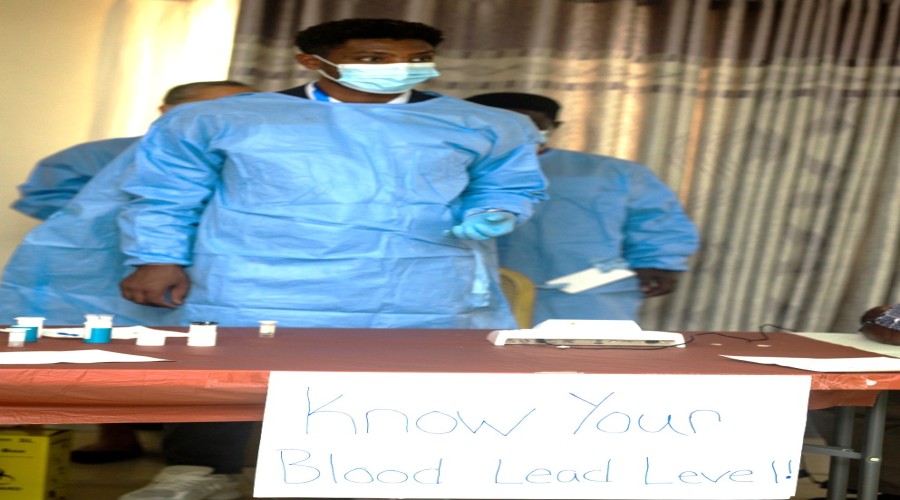
Community
Lead Screening Drive
In many communities across Ghana, families begin their day unaware of a hidden danger around them. Children play near mining sites where illegal gold operations have contaminated the soil with heavy metals. In homes, meals are prepared with locally manufactured aluminium cooking pots commonly known as Dadesen.
Lead exposure has become a growing public health concern
in Ghana. The toxic metal can enter the body through contaminated food, water,
soil, dust, and household products. Over time, it builds up in the body and may
cause serious health complications, including kidney damage, cardiovascular
diseases, developmental disorders in children, and neurological problems.
Local cooking pots made from aluminium or recycled
materials have become one of the concerns raised by health authorities. Some of
these products contain lead from paints or other metals used during production.
When used repeatedly for cooking, the lead may contaminate food consumed by
households daily.
Recently, the Ghana Food and Drugs Authority called for a
ban on Dadesen cooking pots after laboratory tests detected unsafe levels of
lead in some samples. According to the Authority, lead is sometimes added
during manufacturing to soften the metal, despite the associated health risks.
The Authority further noted that many local manufacturers
may not fully understand the health implications of using lead in cookware
production. Consumers were advised to avoid the products and use safer
alternatives such as stainless steel cookware.
Limited Access to Blood
Lead Testing

Blood
Lead Level Testing
For citizens who suspect exposure to lead and want to
test their blood lead levels, access to testing remains limited. Only a few
public health facilities are able to conduct the tests, while the cost of
testing and equipment continues to pose a challenge.
Dr. Carl Osei, Programme Manager for Occupational and
Environmental Health at the Ghana Health Service, explained the situation
during a three day Lead Poisoning Prevention and Health Journalist Training organised by Bloomberg Philanthropies in partnership with Vital Strategies in Koforidua in the Eastern Region.
“We have been talking about the risk of lead and people
will definitely ask where they can go to get tested. This is an area where the
health sector has a huge capacity gap,” Dr. Osei said.
He explained that screening tests used for research are
expensive and often sent abroad for analysis.
“So to test, usually you have the screening test. The
screening test is what we use for research and then send to the US and it is
expensive. I don’t think the government would be able to keep up with importing
those expensive screening tests. Also, for the confirmatory test, the equipment
is expensive,” he said.
According to Dr. Osei, strengthening blood lead testing
services across the country will require investment and partnerships.
“Ideally, all the regional hospitals should have it. Now
we will need support. The government cannot do it alone and will need partners
to come on board,” he added.
Efforts
to Strengthen Capacity

Sumi
Mehta, Vice President at Vital Strategies
Some organisations are already supporting efforts to
improve awareness and testing services within communities.
Sumi Mehta, Vice President at Vital Strategies, said the
organisation conducts free blood lead level testing through community outreach
programmes.
The Global Burden Disease in a study published in 2023, reported about 5,000
cardiovascular deaths in Ghana linked to lead exposure. The figures have
increased concerns about the need for stronger laboratory systems for early
detection and monitoring.
As part of the Bloomberg Philanthropies Lead Poisoning
Prevention Initiative, the CDC Foundation is working with the Government of Ghana and
local partners to strengthen laboratory capacity for blood lead testing. The
initiative includes assessments of current laboratory systems for sample
collection, analysis, and data reporting.
Justice Sitsofe Yevugah, Surveillance Coordinator for
Vital Strategies, said lead poisoning prevention requires collaboration and
public awareness.
“Lead Poisoning Prevention requires a coordinated effort
and community awareness,” he said.
During the training, 22 journalists from across Ghana
received education on lead toxicology and its effects on health and society.
The writer is a science journalist.
Email: prissyof@yahoo.com