African Climate Negotiators push for health-centred climate action ahead of SB64
Date: 2026-05-31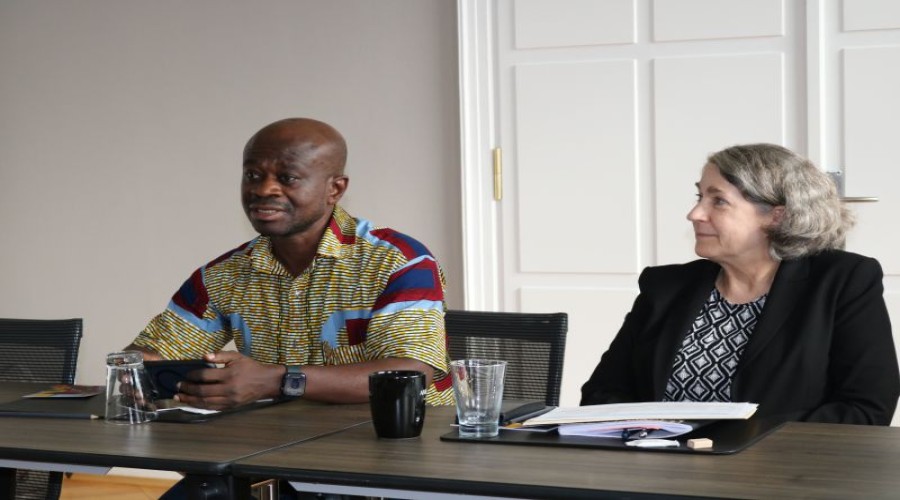
By: Nana Appiah Acquaye
African climate negotiators
have renewed calls to place health at the centre of global climate action,
warning that climate change is increasingly manifesting as a public health
emergency across the continent.
The position was reaffirmed
by the Chair of the African Group of Negotiators on Climate Change (AGN), Nana
Dr. Antwi-Boasiako Amoah, during a Climate and Health Capacity Building
Workshop held in Bonn ahead of the 64th Session of the UNFCCC Subsidiary Bodies
(SB64).
The workshop brought
together negotiators, technical experts, young climate leaders and
representatives from institutions including WHO Africa Regional Office
(WHO-AFRO), the Africa Centres for Disease Control and Prevention (Africa CDC),
Amref Health Africa and the International Institute for Sustainable Development
(IISD).
Dr. Amoah stressed that
climate change and health outcomes are deeply interconnected in Africa, noting
that rising temperatures, floods, droughts, food insecurity, malnutrition, air
pollution and shifting disease patterns are placing significant pressure on
already stretched health systems.

He highlighted growing
evidence that climate-sensitive diseases are expanding into new regions while
extreme weather events continue to damage critical health infrastructure,
worsening vulnerabilities across the continent.
The workshop, supported by
IISD, builds on the launch of the African Negotiators Climate and Health
Curriculum developed by Amref Health Africa and introduced in Dar es Salaam
last year. Participants noted that since its launch, climate-related health impacts
have intensified, underscoring the urgency of integrating health into climate
policy frameworks.
Dr. Amoah also pointed to
progress in embedding health within the Global Goal on Adaptation (GGA), noting
that ongoing discussions under the Baku Adaptation Roadmap and the adoption of
Belém Adaptation indicators present an opportunity for Africa to shape global
adaptation measurement and financing.
He urged African negotiators
to ensure that health indicators under the adaptation framework are
context-specific, practical and reflective of Africa’s climate realities,
including the disproportionate burden of climate-related health risks on
vulnerable communities.
Reaffirming the AGN’s
position, Dr. Amoah called for stronger coordination among African negotiators
to advance coherent strategies that elevate climate and health as a central
pillar of global negotiations.
He emphasized that effective
climate action must ultimately be measured by its ability to protect people,
stating that health remains the clearest human dimension of the climate crisis.