By: Nana Appiah
Acquaye
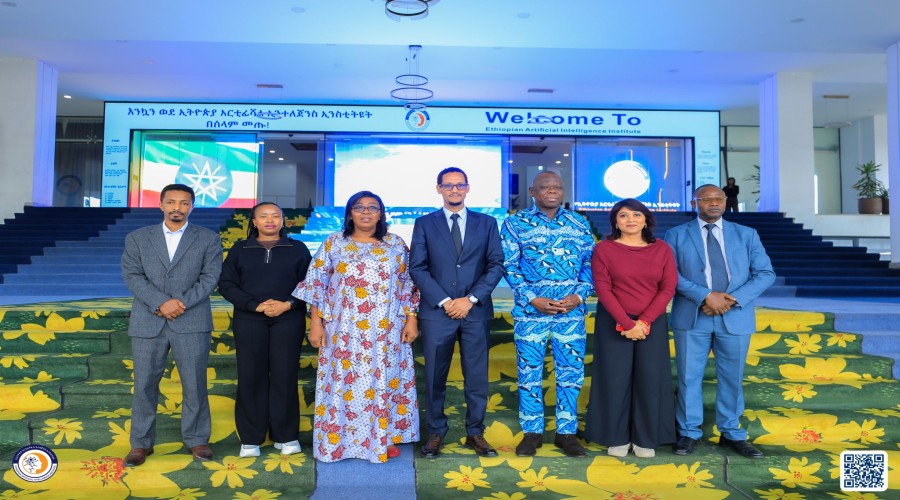
Health ministers from
several African countries have commended Ethiopia’s rapid progress in
artificial intelligence (AI) after visiting the Ethiopian Artificial
Intelligence Institute during the 76th WHO Regional Committee for Africa
Meeting.
The ministers said they had
not previously seen a similar level of AI development in Africa and suggested
that other countries could learn from Ethiopia’s experience and collaborate
with the institute.
The visit provided the
participating health ministers with an opportunity to examine the institute’s
work and explore how artificial intelligence and related technologies could be
applied to address challenges in healthcare and other sectors.
The Minister of Health said
Ethiopia had demonstrated its potential through the development of innovative
AI solutions, describing the work of the institute as evidence of the country’s
growing technological capabilities.
He said African countries
need to work together and learn from one another’s experiences to build
stronger capabilities and broaden access to advanced technologies. He also
encouraged African health ministers and other countries to engage with and
cooperate with the Ethiopian Artificial Intelligence Institute.
The institute’s Deputy
Director General, Dr Taye Girma, presented an overview of its research and
development activities, including work in health, agriculture and other
sectors.
He said the Ethiopian
Artificial Intelligence Institute is undertaking extensive research and
development activities as a centre of excellence for artificial intelligence in
Africa.
The visiting ministers were
also briefed on the institute’s cloud services, which are being provided to
institutions through the development of a large-scale data centre built to
international standards.
The briefing further covered
Ethiopia’s national AI policy and the institute’s support for technology
startups as part of efforts to strengthen the country’s broader artificial
intelligence ecosystem.
The visit comes as African
countries increasingly explore the use of artificial intelligence in
healthcare, agriculture, public services and other sectors, while seeking
stronger regional cooperation to build local capacity and develop solutions
suited to the continent’s needs.