By: Robert
Kwaku Annor
Ghana and the African Union
Commission are deepening cooperation on energy financing, data, regional gas
infrastructure and renewable energy development as the country advances efforts
to strengthen its energy security and expand clean power generation.
The discussions took place
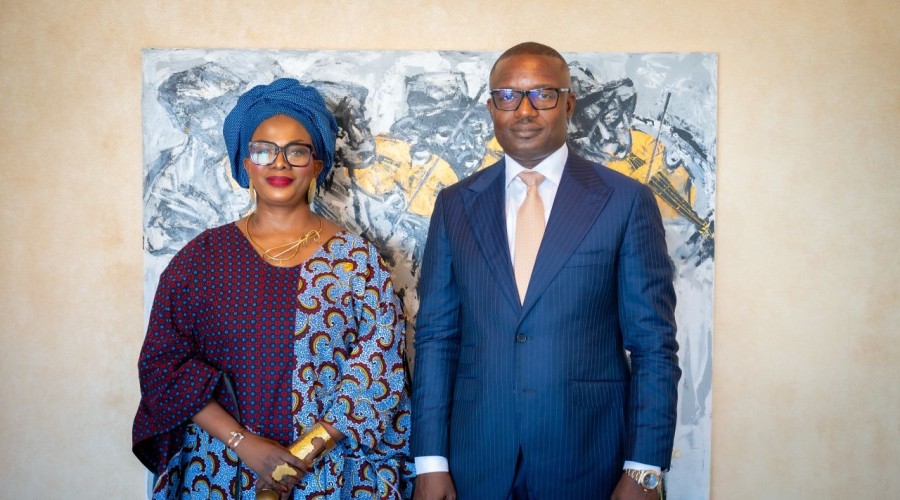
in Accra between African Union Commissioner for Infrastructure and Energy H.E.
Lerato D. Mataboge and Ghana’s Minister for Energy and Green Transition, Hon.
Dr John Abdulai Jinapor, on the sidelines of AOW Energy 2026.
The bilateral engagement
focused on strengthening access to African development finance for national
energy programmes, improving energy data and statistics, advancing regional
infrastructure and ensuring that investment risks on the continent are assessed
against African realities.
Discussions also highlighted
continued cooperation between the African Energy Commission and Ghanaian
institutions on energy data and statistics, as well as the importance of
regional approaches to infrastructure that allow multiple economies to benefit from
shared facilities.
Ghana’s experience with the
West African Gas Pipeline was cited as an example of the value of regional
energy integration. Gas transported from Nigeria through Benin and Togo
supports Ghana’s power system and contributes to an electricity access rate approaching
90 percent. Ghana’s delegation told the Forum that the shift away from liquid
fuels has generated annual savings of more than $250 million.
Opening the main plenary at
AOW Energy 2026, Minister Jinapor described the continent’s energy transition
as a journey from “energy poverty to energy prosperity.”
Ghana’s renewable energy
programme also featured in the discussions, with competitive solar procurement
expanding from 200 megawatts towards a 1,000 MW ambition alongside energy
storage.
The programme supports
Ghana’s target of achieving 10 percent renewable energy penetration by 2030.
Solar generation during the day is expected to allow hydropower resources to be
conserved for evening demand, helping protect the reservoirs that support the
national grid.
The engagement further
explored how African capital can be better aligned with African energy
projects, both in Ghana and across the wider continent.