By: Nana Appiah Acquaye
The Virtual Assets
Association of Kenya (VAAK) has contributed an industry perspective to a
five-day advanced training on financial investigations and virtual assets in
Nairobi, as regulators, investigators, prosecutors and financial intelligence
analysts strengthen their capacity to address illicit finance involving digital
assets.
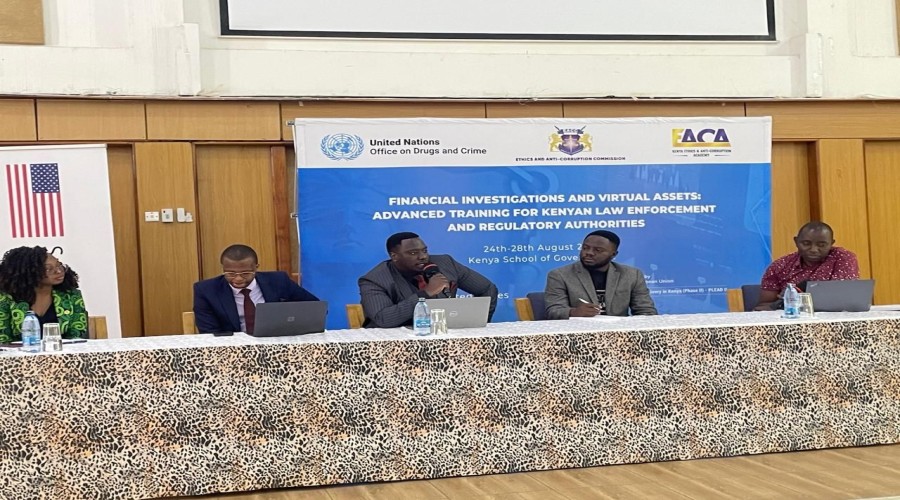
VAAK Chief Executive Officer
Robert Muoka participated in the training and delivered a presentation during
Session 18, titled “Industry Perspective on Compliance and Self-Regulation,”
focusing on the practical implementation of Kenya’s Virtual Asset Service
Provider (VASP) Act from within the virtual asset industry.
Muoka’s presentation
examined compliance readiness among prospective licensees, the practical
challenges of meeting Know Your Customer (KYC), Travel Rule and reporting
requirements within short implementation timelines, and how industry
participants have organised themselves to engage regulators and support
responsible growth ahead of full licensing.
The five-day programme
brought together key actors across the financial investigation chain, including
investigators, prosecutors, financial intelligence analysts and regulators from
across the region.
The training was organised
by the United Nations Office on Drugs and Crime (UNODC) Illicit Finance Fusion
Centre for Africa, with support from the U.S. Department of State and Law
Enforcement Affairs, the Programme for Legal Empowerment and Aid Delivery
(PLEAD), the European Union in Kenya and the Ethics and Anti-Corruption
Commission (EACC) Kenya Ethics and Anti-Corruption Academy.
The programme focused on
strengthening capabilities to detect and trace illicit financial flows,
preserve evidence, conduct seizures, support international cooperation and
build cases for prosecution.
The engagement comes as
virtual assets and stablecoins become increasingly integrated into Africa’s
financial systems, raising the need for stronger capacity among law enforcement
and regulatory authorities to identify suspicious transactions and trace funds
across blockchain networks and payment systems.
VAAK said industry
participation in such programmes is important for ensuring that regulatory and
enforcement approaches are informed by practical realities within the virtual
asset sector.
The association thanked
UNODC, EACC and other partner institutions for providing an opportunity for the
private sector to contribute to discussions on compliance, regulation and financial
investigations.