By: Nana
Appiah Acquaye
Côte d’Ivoire is
strengthening coordination of its digital public services as the government
targets the coordinated delivery of 700 services over the next three years and
a transition to a paperless administration by 2030.
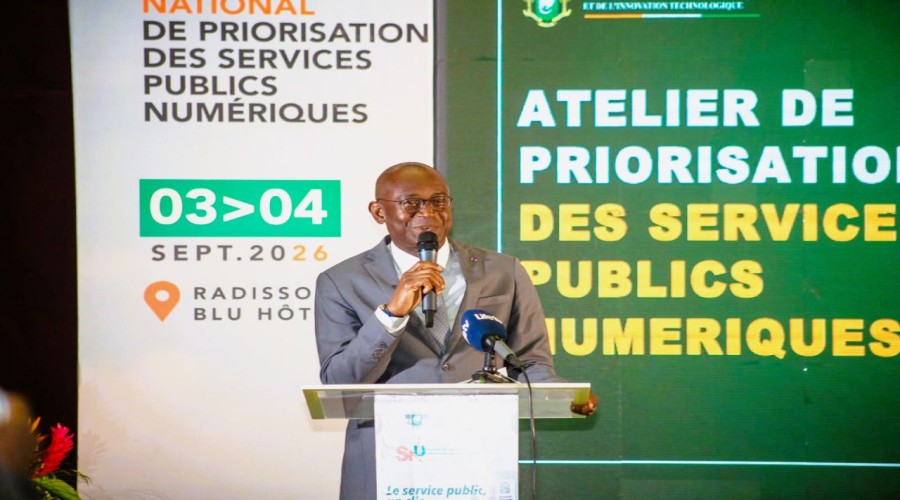
Minister of Digital
Transition and Technological Innovation Djibril Ouattara announced the measures
at the close of a two-day national workshop on the prioritisation of digital
public services held in Abidjan.
The workshop assessed 140
public services from 620 identified across ministries and public institutions,
with 59 high-impact services selected for priority implementation.
According to the Director
General of the National Company for Computer Development (SNDI), Nongolougo
Soro, 10 “quick wins” are expected to be delivered by the end of 2026. They
include diploma authentication, digital proof of life for retirees, electronic
patient records and a digital post office box.
The exercise also identified
five priority common digital infrastructures: digital identity, data exchange,
a single payment gateway, trust services and reference registries.
The infrastructure is
intended to reduce fragmentation among government platforms and strengthen
interoperability between public systems, allowing citizens to access government
services more easily.
Soro said the current
fragmentation of platforms and the lack of harmonised use of digital identity
remain key challenges and called for the development of a single portal through
which citizens can access different digital public services.
Ouattara placed governance
at the centre of the transformation agenda, describing it as the “number one
priority” for digital government.
He announced plans to revive
the National Digital Council, known as CN Digit, under the chairmanship of the
Prime Minister, supported by an interministerial committee and an executive
secretariat responsible for monitoring implementation.
The government is also
considering three draft decrees to strengthen the governance framework,
including one addressing the role of Directors of Information Systems within
ministries.
Ouattara called for lessons
from previous digital projects to be applied to future initiatives, with
investments better aligned with the actual needs of public administrations and
citizens.
“We can do better by working
together,” he said, stressing the importance of coordination across government
institutions.
The prioritisation process
is intended to create a more integrated digital government by combining common
infrastructure, stronger governance and coordinated service development.