By: Nana
Appiah Acquaye
The West Africa Geophysics
(WAGeo) Lab at Kwame Nkrumah University of Science and Technology (KNUST),
together with its project partners, is exploring the use of geophysical methods
to improve understanding of soil-water dynamics and support climate-smart
agriculture in Ghana.
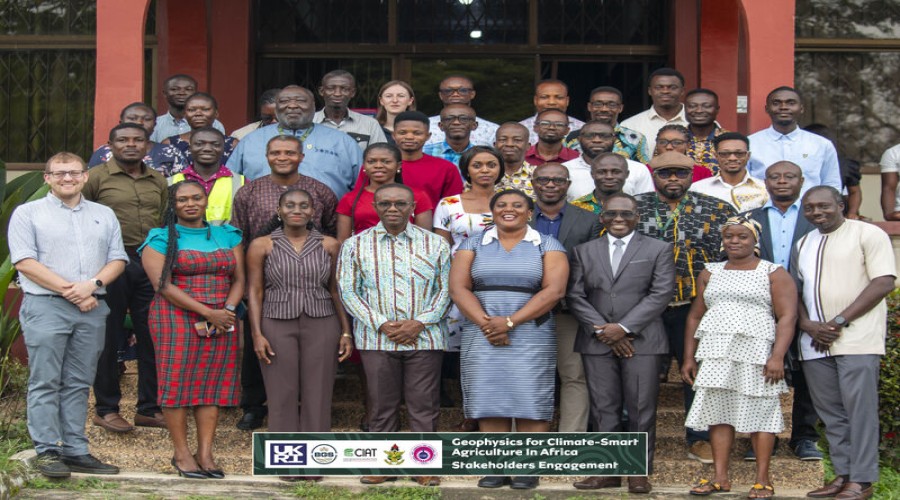
The engagement, held as part
of the Geophysics for Climate-Smart Agriculture project, brought together
farmers and farmer-led organisations, agricultural extension officers,
policymakers, researchers, non-governmental organisations, water-resource
stakeholders, agribusinesses and private-sector actors, regional research
organisations and members of the public.
The project partners
presented the initiative’s objectives and discussed how geophysical techniques
can be used to understand changes in soil conditions and the effects of
different agricultural practices on soil and crop performance.
WAGeo Lab Lead Dr Cyril D.
Boateng said the collaboration creates an opportunity to bring geophysics and
agriculture together to improve understanding of how farming practices affect
soil conditions and crop productivity.
Dr Michael Kweku Edem
Donkor, who leads the project’s instrumentation component, highlighted the
importance of developing local capacity in geophysical instrumentation to
support the long-term sustainability of research and monitoring activities.
Russell Swift of the British
Geological Survey said the collaboration could strengthen the connection
between agriculture and geophysics while helping KNUST develop new capabilities
in geophysical monitoring.
Dr Steven Yeboah, Principal
Research Scientist at the CSIR-Crops Research Institute, noted that reliance on
imported research equipment can become difficult to sustain when local capacity
to maintain and repair the instruments is limited.
He said the project provides
an opportunity to build a team of Ghanaian researchers capable of developing,
maintaining and operating geophysical systems locally.
Dr Patricia Amankwaa-Yeboah,
Systems Agronomist at the International Center for Tropical Agriculture (CIAT),
said the project demonstrates the value of bringing together expertise from
different disciplines to address complex agricultural challenges.
The stakeholder engagement
also provided farmers, agricultural practitioners, researchers and other
participants with an opportunity to share their experiences, expectations and
perspectives on how research can be translated into practical agricultural solutions.
WAGeo Lab said the
discussions reinforced the importance of interdisciplinary collaboration and
direct engagement with stakeholders to ensure that research responds to real
agricultural needs.