By: Nana
Appiah Acquaye
Kenya has launched the
second phase of its Digital Literacy Programme device rollout, targeting 10,382
Junior Secondary Schools across all 47 counties as the government intensifies
efforts to strengthen digital education and prepare learners for an increasingly
technology-driven economy.
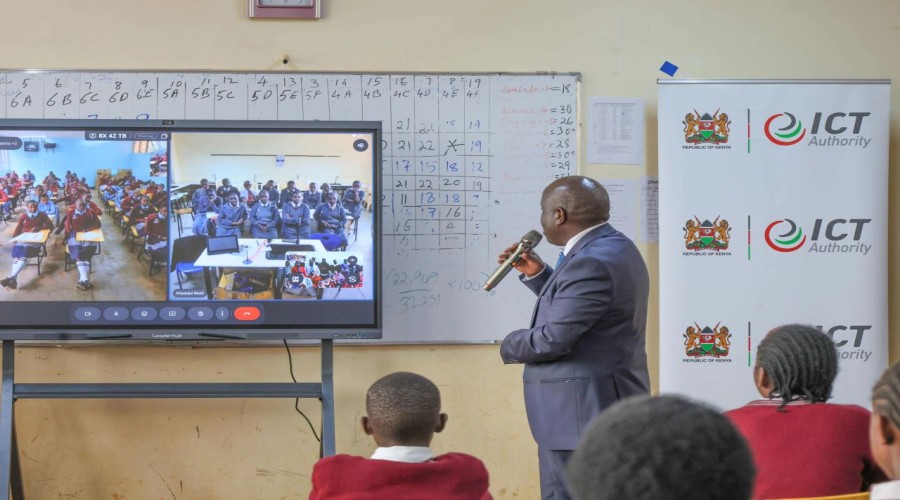
The Nairobi County rollout
was launched at Lenana Primary School alongside Dagoretti South MP and Chairman
of the Parliamentary Committee on Communication, Information and Innovation,
Hon. John K. J. Kiarie, and ICT Authority CEO Jessy Maruti.
The programme is being
implemented under the Kenya Digital Economy Acceleration Project (KDEAP) and
includes the deployment of teacher laptops and interactive smart boards,
supported by a national teacher training cascade.
Nairobi County has reached
substantial completion, with devices delivered to all 98 schools in the county.
Installation, inspection and acceptance have been completed in 91 schools,
representing a completion rate of 92.9 percent.
Schools in Dagoretti South
Constituency, including Lenana Primary School, are among those equipped with
the new digital learning tools.
The government said the
programme goes beyond providing devices, with the focus shifting from basic
access to the meaningful use of technology in education. Smart boards, laptops,
connectivity and digital platforms are expected to transform teaching methods,
learner engagement and the way students interact with knowledge.
Teacher capacity building
remains a key component of the programme, with the government emphasising the
need to equip educators with the skills and confidence required to integrate
technology effectively into learning.
The initiative also comes as
Kenya prepares its education system for an economy increasingly shaped by
artificial intelligence and other emerging technologies. Digital skills,
creativity, problem-solving and technological literacy are expected to become increasingly
important for young people entering the workforce.
The government is therefore
scaling up connectivity, expanding digital infrastructure and rolling out
devices nationwide as part of efforts to build a broader digital ecosystem
connecting schools, institutions, communities and the economy.
Beyond the classroom, the
programme is intended to help prepare young Kenyans for opportunities in
software development, cybersecurity, artificial intelligence, business