By:
Robert Kwaku Annor
A regional dialogue on
artificial intelligence governance in Africa has highlighted the need to
translate governance principles into practical commitments that address local
realities, accountability, labour protections and inclusion across the
continent.
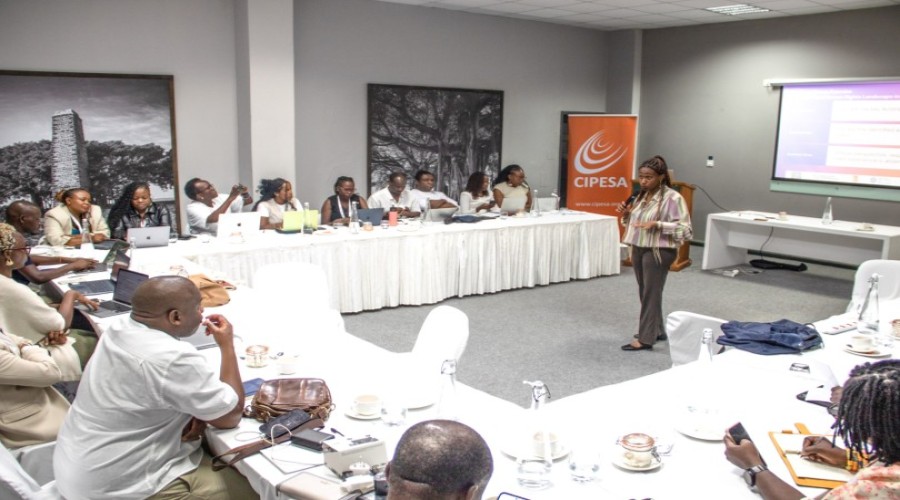
The Day Zero dialogue,
convened by the Global Center on AI Governance with Digital Action and the
Collaboration on International ICT Policy for East and Southern Africa
(CIPESA), took place ahead of #FIFAAfrica2026 and brought together stakeholders
to examine what it takes to govern AI in ways that respond to Africa's local
realities.
Dr. Melissa Omino of the
Centre for Intellectual Property and Information Technology Law (CIPIT) argued
that a rights-based approach must be translated into concrete commitments,
including how data used to build AI systems is governed, how workers participate
in decision-making and how community interests are represented.
Michael Aboneka from the
Centre for Human Rights, University of Pretoria, reflected on governance
approaches being considered across the continent and stressed the importance of
accountability regardless of the model adopted.
The dialogue also examined
labour conditions within Africa’s growing AI value chain. In presenting the
Global Index On Responsible AI 2026 findings, Selamawit Engida Abdella
highlighted a pattern in which Africa scores highly on skilling and
capacity-building but low on labour protections.
She noted that Africans are
increasingly concentrated in the underpaid, precarious and sometimes dangerous
parts of the AI value chain.
Selamawit Engida Abdella
also highlighted inclusion and diversity, gender equality, children's rights,
language and culture as persistent gaps across Africa's diverse societies.
The discussions come as
African and international institutions continue to develop approaches to AI
governance. A regional dialogue convened by the United Nations Economic
Commission for Africa in April 2026 similarly focused on inclusive and
responsible AI governance, including transparency, accountability, human
oversight, digital inclusion and capacity-building.
The Global Center on AI
Governance said the work following the Day Zero dialogue will focus on turning
the discussions into an action plan for meaningful, context-responsive AI
governance in Africa.