By: Robert
Kwaku Annor
The African Centre of
Meteorological Applications for Development (ACMAD), the World Meteorological
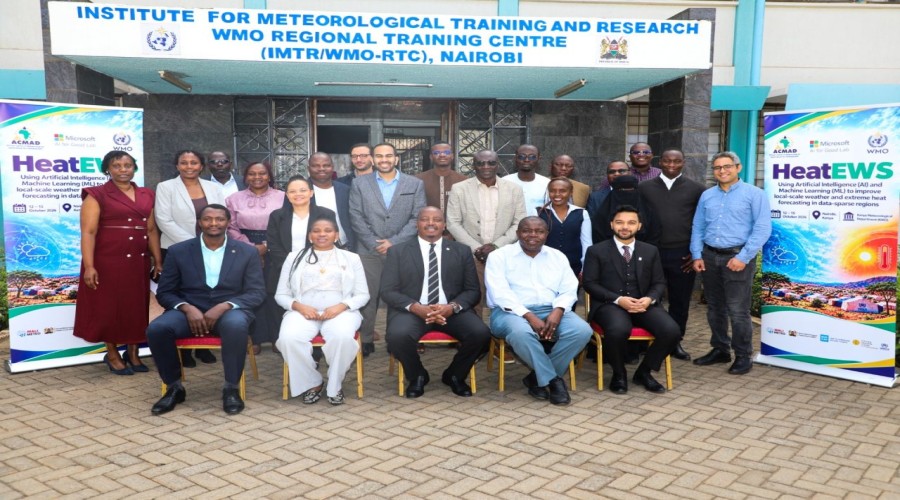
Organization (WMO) and the Kenya Meteorological Department have launched a Heat
Early Warning System (HeatEWS) training workshop in Nairobi to strengthen local-scale
extreme heat forecasting and support practical early warning decisions.
The workshop, held under the
theme “Getting Ahead of Extreme Heat in Communities Hosting Forcibly Displaced
People,” brings together meteorological, technical and humanitarian partners.
The workshop was opened by
Edward Muriuki, Acting Director General and Permanent Representative of Kenya
to WMO, and Hlobsile Sikhosana, WMO Representative for Eastern and Southern
Africa. Their keynote addresses highlighted the timely adoption of artificial
intelligence (AI) and machine learning to strengthen weather forecasting and
early warning services.
Participants will explore
how AI, machine learning, local observations and forecast verification can
improve heat forecasting in data-sparse regions, with operational perspectives
from Mali and Kenya.
The workshop is organised by
ACMAD, WMO and the Kenya Meteorological Department in partnership with
Microsoft AI for Good Lab, UNHCR, MALI-METEO, NORCAP, part of the Norwegian
Refugee Council, and the Climate Hazards Center.
The shared goal is to turn
improved forecasts into timely, actionable information for communities exposed
to extreme heat.
The organisers said the
workshop would provide four days of learning, practical exercises and
collaboration.