By: Nana
Appiah Acquaye
The International Monetary
Fund (IMF) has warned of growing risks to global financial stability, including
a potential correction in artificial intelligence (AI) valuations, sovereign
bond yield shocks and rising cyber threats, with emerging markets among the
least prepared to respond.
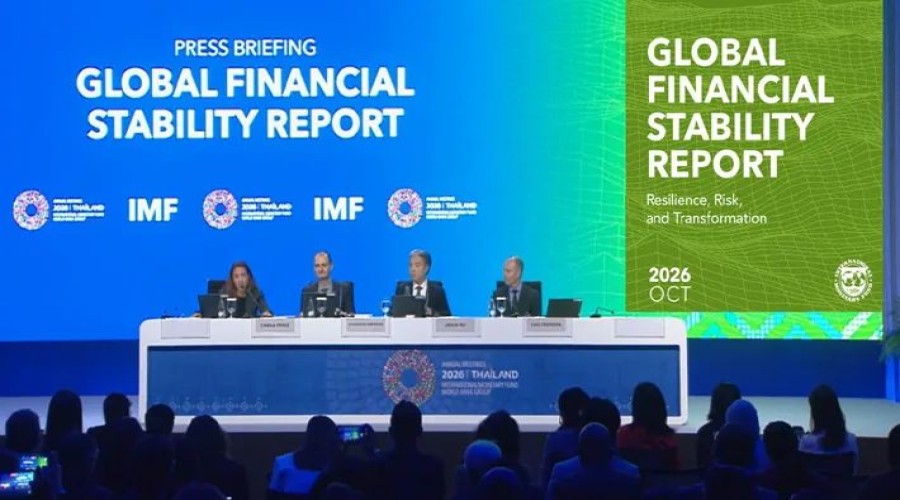
The warning was highlighted
by the Blockchain Association Rwanda following the release of the IMF’s Global
Financial Stability Report, titled “Resilience, Risk, and Transformation,” on
October 13, 2026.
According to the
association, global markets are holding, but underlying risks are growing, with
the potential for individual threats to combine into a systemic challenge.
The three risks identified
include a possible AI-related market correction, driven by high valuations,
rising leverage and concentrated exposure. If AI profitability disappoints, the
correction could be sharp and widespread.
The report also highlights
the risk of sovereign bond yield shocks, as renewed inflation or fiscal
concerns could push government yields sharply higher, affecting markets that
price assets based on sovereign debt.
Cyber threats represent
another concern, particularly as financial services become increasingly
digital. The Blockchain Association Rwanda cited an estimate that 40% more
cybersecurity workers are needed globally, while emerging markets remain the
least prepared to address the threats.
The IMF report also examines
tokenization, presenting a balanced assessment of its potential benefits and
risks.
Tokenization can streamline
the asset life cycle, improve transparency, enable fractional ownership and
support 24-hour trading. However, it can also introduce legal uncertainty,
regulatory fragmentation, new channels for leverage and liquidity mismatches.
The IMF recommends a
technology-neutral regulatory approach that removes unnecessary barriers while
safeguarding financial stability.
For Rwanda, which passed its
Virtual Assets Business Bill in May 2026, the association said the IMF’s
position aligns with the direction of the Capital Market Authority of Rwanda
(CMA Rwanda).
The association said
frontier economies have depleted policy buffers, leaving them more exposed to
global yield shocks, while limited preparedness for cyber threats presents a
direct warning for African institutions.
It added that tokenization
offers opportunities for the continent but must be developed within clear
regulatory frameworks.
“The IMF is not saying
blockchain is dangerous. It is saying: build the frameworks before the risks
arrive,” the association said, urging other African countries to accelerate
efforts to establish appropriate regulatory safeguards as digital finance expands.