By: Nana
Appiah Acquaye
Ghana has highlighted the
need for stronger institutional capacity, predictable funding and sustained
international cooperation to advance its nuclear power programme at the
International Atomic Energy Agency (IAEA)’s International Ministerial
Conference on Nuclear Power in Incheon, Republic of Korea.
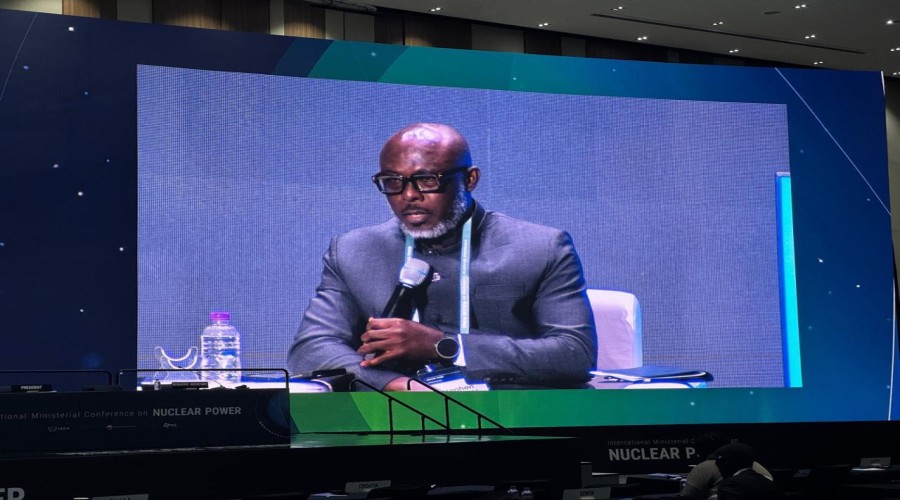
Stephen Yamoah, Executive
Director of Nuclear Power Ghana and a Principal Research Scientist at the Ghana
Atomic Energy Commission, contributed to a panel discussion titled “Expanding
Horizons: New Builds and Embarking Countries” during the conference, which took
place from October 27 to 29, 2026.
The conference brought
together ministers, policymakers, nuclear energy experts, industry leaders and
international organisations from around 60 countries to discuss the role of
nuclear energy in energy security, sustainable development and the global clean
energy transition.
A central message from the
panel was that a successful nuclear power programme requires much more than
constructing a nuclear power plant. It depends on strong national institutions,
robust infrastructure, effective programme management, sustainable financing, a
skilled workforce and public confidence.
Yamoah said these
foundations must be developed through careful planning, informed
decision-making and sustained international cooperation.
For Ghana, he described the
development of a nuclear power programme as a strategic undertaking requiring
long-term commitment, institutional readiness and deliberate capacity
development.
While Ghana has established
a strong foundation for national coordination, he said maintaining momentum
would require even stronger implementation of existing coordination
arrangements and, above all, predictable funding to translate institutional
readiness into measurable progress.
“Our ambition is not simply
to build our first nuclear power plant. It is about developing the national
capacity to deliver the project safely, make it financially viable, and ensure
its reliable and sustainable operation for the benefit of future generations,”
Yamoah said.
He added that achieving this
ambition requires sustained investment in institutional capabilities, human
resources, infrastructure and international partnerships.