By: Nana
Appiah Acquaye
African and South-South
cooperation has been highlighted as a key driver of resilient agricultural
value chains and agro-industrialisation during discussions at the 31st United
Nations Climate Change Conference (COP31).
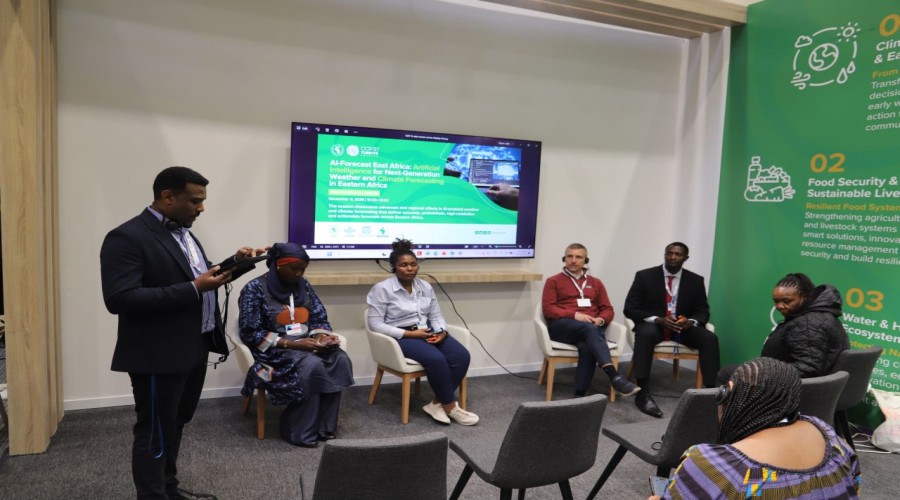
Soha Benchekroun, Senior
Adviser on Climate Finance, Intra-African and South-South Cooperation at the
Office of Kenya's Special Envoy for Climate Change, moderated a panel examining
how collaboration among African countries and partners across the Global South
can strengthen agricultural resilience and advance agro-industrialisation.
The panel brought together
Dima Al-Khatib, Director of the United Nations Office for South-South
Cooperation; Boaz Blackie Keizire, Director for Policy and State Capability at
AGRA; and Kwame Ababio, Senior Programme Officer for Climate Resilience Mitigation
at the African Union Development Agency (AUDA-NEPAD).
Discussions focused on
policy reforms, financing mechanisms, regional cooperation and practical
initiatives to strengthen agricultural value chains and improve the resilience
of farming communities.
One of the key issues was
connecting farmers to finance, with participants examining the policy reforms
needed to link farmers with financiers and improve access to funding for
smallholder farmers.
The panel also emphasised
policy coherence and the need to align regional frameworks, including the
Comprehensive Africa Agriculture Development Programme (CAADP) and the
Programme for Infrastructure Development in Africa (PIDA), with other
continental policies. This alignment was identified as important for advancing
climate-resilient agricultural infrastructure and embedding agricultural
resilience throughout Africa's climate policy architecture.
On South-South partnerships,
participants explored frameworks for implementation through knowledge and
technology exchange, cross-border value addition and improved access to
finance, including opportunities for collaboration with economies across the Global
South.
The discussions further
examined how to channel more capital into agro-industrialisation projects and
strengthen coordination at sub-regional and regional levels. Regional Economic
Communities, African policy institutions and research organisations were identified
as important actors in making the agenda deliverable.
Specific agricultural value
chains, including rice and fertilisers, also featured in the discussions,
alongside opportunities to develop regional value chains, expand
agro-processing and strengthen African trade and investment to support job
creation across the continent.
The engagement highlighted
the importance of combining policy coordination, financing and international
cooperation to build more resilient agricultural systems and unlock
opportunities for value addition across Africa.
“Resilient agricultural
value chains strengthen both economic and climate resilience,” the Office of
Kenya's Special Envoy for Climate Change stated.