By: Nana Appiah Acquaye
The World Bank Group, the Government of Ghana and development
partners have launched the Compact with Africa 2.0 (CwA 2.0) Ghana Pilot. The
program aims to turn policy reforms into private investment, wider trade, and
more and better jobs.
Ghana is one of four CwA 2.0 pilot countries, alongside Angola,
Egypt and Zambia. The pilot is financed through the CwA 2.0 Multi-Donor Trust
Fund, which supports the second phase of the G20 Compact with Africa and is
expected to operate from 2025 to 2033. Germany is the Fund’s principal
contributor. South Africa, G20 co-chair of the Compact with Africa, has
contributed US$5 million.
Under a One World Bank Group approach, the pilot combines the World
Bank’s policy and reform support with IFC’s private sector expertise and
investment capabilities. Across its four work streams, it aims to mobilize
about US$245 million in private investment. “The success of the pilot
will not be measured by the number of reports produced. It will be measured by
whether reforms become operational, investment opportunities move forward and
firms, including MSMEs, are better able to grow, export and create jobs,” said
Rob Taliercio, Division Director, World Bank, said.
The pilot responds to a structural jobs challenge. Preliminary
findings from the World Bank Group’s forthcoming Country Growth and Jobs
Diagnostic show that Ghana’s working-age population grew by 3.7 million between
2012 and 2024, while the economy created 435,000 net jobs. The main obstacle
for Ghanaian firms is not starting up but growing to scale. They face
regulatory uncertainty, high trade and logistics costs, limited access to
finance, and difficulty meeting the standards of regional and global markets.
Four work streams, one objective
Modernizing Ghana’s trade policy – The World Bank Group will support
the Ministry of Trade, Agribusiness and Industry (MoTAI) in revising the
National Trade Policy to reflect AfCFTA implementation, services and digital
trade, export standards, trade facilitation and logistics. The revised policy
is to be costed and backed by a detailed action plan, clear responsibilities,
performance indicators and a monitoring framework. Today, clearing imports
takes an average of 23 days, and trade costs amount to about 24 percent of
export value.
Improving the investment climate – The pilot will help put Ghana’s new
investment framework into practice through secondary regulations, service
standards for investors and the one-stop shop, a single published repository of
rules, fees and timelines, and training for the Ghana Investment Promotion
Authority (GIPA). Together with the trade policy work, this is expected to
unlock about US$200 million in additional private investment.
Preparing the TransVolta investment opportunity – The pilot will strengthen the
technical, commercial, environmental, regulatory and financial preparation of
the TransVolta Logistics Network. The proposed 762-kilometer multimodal
corridor would link Tema Port, via Lake Volta, with northern Ghana and Sahelian
markets. Studies suggest it could reduce transit by 25 to 30 percent. The work
stream targets about US$30 million in private investment.
Building more competitive textile and garment firms – Using the Better Work approach, IFC
will train managers and supervisors in garment and light-manufacturing firms in
productivity, workplace practices and labor standards, and connect them with
buyers and investors. Ghana's garment exports could grow up to 43-fold, adding
as much as US$1.5 billion.
“We want to be kept accountable. We look forward to being judged on
the basis of the results of this work, based on the investment enabled, the
jobs created, and the days and cost cut at the border,” Leonardo Iacovone,
Practice Manager, Finance, Competition and Investment, World Bank, said.
Government and partner commitment
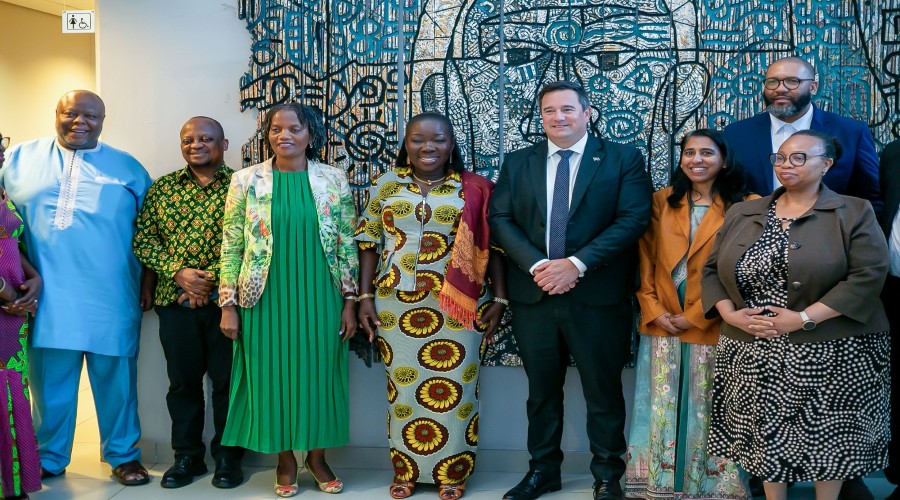
Hon. Elizabeth Ofosu-Adjare, Minister for Trade, Agribusiness and
Industry, said the pilot is aligned with the government’s industrial agenda.
She cited record non-traditional export earnings of US$5 billion in 2025, a
target of at least US$10 billion by 2030, the Ghana Investment Promotion
Authority Act 2026, and a proposed Business Regulatory Reform Bill. “The
compact can help our institutions apply these reforms consistently so that an
investor experiences one clear process rather than many. For this partnership
to succeed, businesses must feel the difference,” she said.
Dr. Bärbel Kofler, Germany’s Deputy Minister for Economic
Cooperation and Development and Parliamentary Secretary of State, said the
Compact’s first phase delivered more than 100 reforms. The next test, she said,
is what investment delivers on the ground. “It is not only about mobilizing
capital; that is important, but it is also about what this capital at the end
of the day is really delivering. No society can afford to leave 50 percent of
their population behind, so please invest in women,” she said.
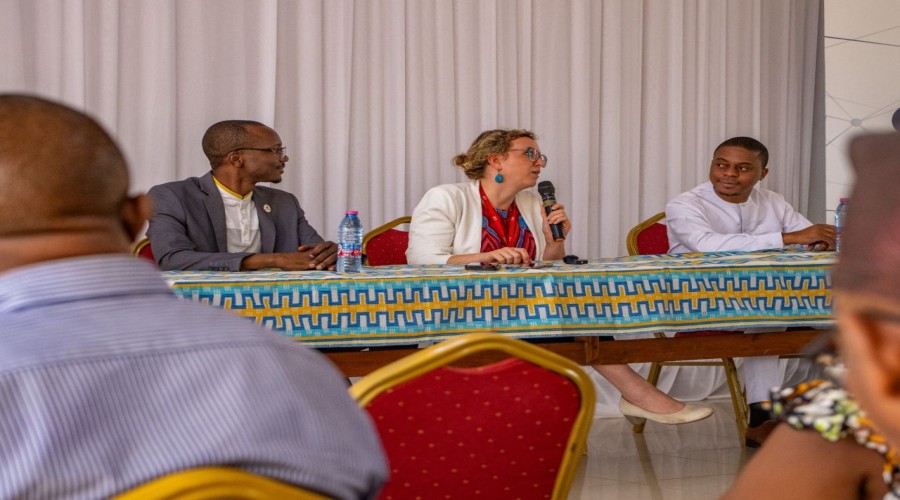
Panel: From policy reform to investment, trade and jobs
Representatives of government, investment promotion and industry
discussed what it will take to turn reform into investment and jobs. Panelists
identified regulatory predictability, consistent application of rules, and
transparent, consultative tax administration as decisive for investor
confidence.
On trade, panelists described work to cut costs and delays at
borders and ports. This includes mutual recognition arrangements, joint border
posts with neighboring countries, and standard operating procedures with time
benchmarks for exporters. A National Trade Policy Committee that includes
private sector representatives will help make sure the revised policy reflects
stakeholder views. The TransVolta corridor was presented as a way to link
farming communities with processing centers and Sahelian markets.
Manufacturers stressed the need for larger and more consistent
orders, including through local procurement, and for long-term, affordable,
manufacturing-specific finance. They also pointed to dependence on imported raw
materials and the cost of utilities, and noted that sourcing from neighboring
countries under the AfCFTA is beginning to ease input constraints.
The session was moderated by Deo Onyango, Principal Country
Officer, IFC. Panelists were Simon Madjie, Chief Executive Officer, Ghana
Investment Promotion Authority (GIPA); Bernard Ayensu, Director, Policy
Planning, Monitoring and Evaluation Directorate (PPMED), Ministry of Trade,
Agribusiness and Industry; Nana Poquah A.A. Adiamah, National Coordinator,
Association of Ghana Apparel Manufacturers (AGAM); and Samuel Ofori, Project
Manager, TransVolta, LMI Holdings. The World Bank Group will work with the
government, the private sector and partners to make sure implementation
reflects these priorities.