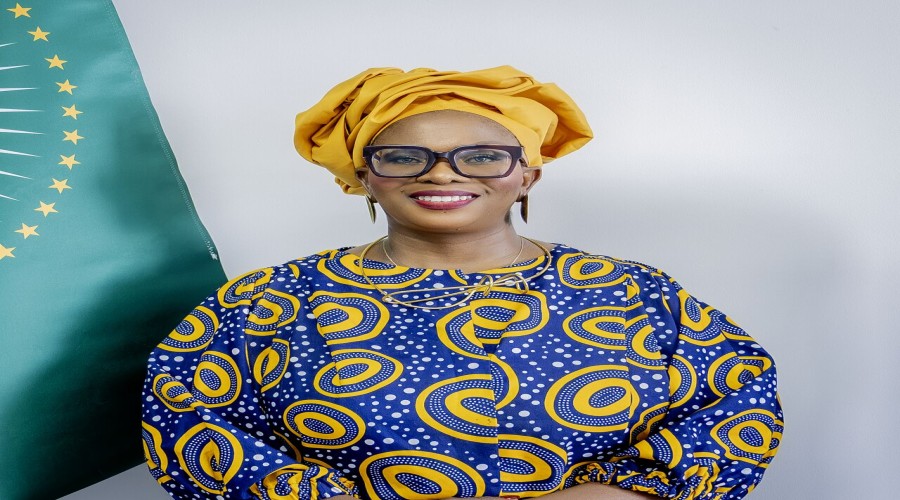
By: Willie Kanyeki,
VP SSA, TerraPay
There’s a simple reason
why Africa is so often referenced in global discussions about digital finance:
mobile money is everywhere. In countries where bank branches and card networks
reach only a fraction of the population, mobile phones fill the gap, enabling
financial inclusion for millions. Wallet penetration now exceeds 80 per cent in
some markets, supported by agent networks that bring services into both rural
villages and city neighbourhoods.
The impact has been
transformative. Wages can be paid and received instantly. Households pay for
power and water through mobile interfaces. Traders settle transactions with a
handset rather than relying on cash couriers. This model of finance was not a parallel
track alongside traditional banking – in many places, it became the system
itself. Africa did not wait for the slow spread of physical banking
infrastructure; it moved directly to digital.
This example shows how
technology can reshape the financial landscape. But adoption was only the first
step. If financial inclusion is to be more than account ownership, then
participation must follow. And participation depends on behind-the-scenes infrastructure
working seamlessly across platforms and borders.
Fragmented success
The success of mobile
wallets has created its own constraints. Within their domestic ecosystems, they
function smoothly. A Kenyan user can pay for goods, settle a bill or send money
to a neighbour with ease. But the moment that transaction crosses a boundary –
from one wallet brand to another, or from one country to another – the process
slows and becomes more expensive.
Closed-loop design, once
a strength for reliability, is now a barrier. Such systems mean users need
multiple accounts to interact across providers, businesses can’t easily scale
into neighbouring markets, and families pay more to send remittances. A tool
designed to enable financial access becomes a blockage.
Mobile money solved the
access problem, but not the connection problem. Millions of people are now
inside digital systems, but those systems often stop at the edge of their own
networks.
Why interoperability
matters
The next phase is about
joining those systems together. Interoperability – the ability to move money
between wallets and banks, and across borders – is what turns access into
participation.
Interoperable systems
would give practical force to the African Continental Free Trade Area by making
regional trade easier to settle. They would help reduce remittance fees toward
the UN Sustainable Development Goal of three per cent for a two-hundred-dollar
transfer, when average costs into Sub-Saharan Africa are currently closer to
eight per cent. They would also provide regulators with greater transparency,
allowing oversight without stifling innovation.
For users,
interoperability makes accounts useful in more places and for more purposes. It
lowers friction for households, workers and businesses who want to extend their
activity beyond the limits of a single provider. And it turns fragmented
systems into a connected financial ecosystem.
Why institutions should
care
Mobile money has often
been treated as separate from mainstream finance, relevant only to the
unbanked. That view is out of date. Wallets are now central to how remittances
move, how merchants accept payments, and how people engage with regional
markets. The line between mobile money and the wider financial system is fading
quickly.
For banks and fintechs,
interoperability is both a responsibility and an opportunity. Shared rails
reduce costa, expand reach and create the transparency that regulators expect.
The G20 has set targets for across-border payments to become faster, cheaper,
more transparent and more inclusive by 2027- and the Financial Stability Board’s
Roadmap for Enhancing Cross-Border Payments identifies payment system
interoperability as one of its three core mechanisms for getting there.
The business case is
just as strong. Interoperability brings predictability because it makes
transactions easier to settle, disputes easier to resolve and compliance easier
to manage. For institutions that answer to regulators and investors, operating
on trusted, transparent rails reduces risk as much as it grows markets.
Regional momentum
Progress will not be
uniform across the continent. In East Africa, long-established mobile money
systems provide a deeper base of experience, both among consumers and
regulators who have been overseeing these markets for more than a decade. In
West Africa, momentum is building quickly, helped by rising smartphone
adoption, national financial inclusion strategies, and a young population that
is open to digital-first services.
These regions will shape
how interoperability develops. Their decisions on settlement systems, identity
checks and dispute handling will create precedents to influence the rest of the
continent. Progress will not appear as a single breakthrough but as gradual
alignment: cleaner APIs, consistent standards, and more cooperation across
providers.
From access to
participation
Mobile money has
delivered access on a remarkable scale. The next test is whether that access
enables real participation – the ability to pay, trade and transfer across
providers and borders without obstruction.
That outcome depends on
interoperability. Not as a future add-on, but as the backbone of digital
economies. Without it, Africa’s leap into mobile finance ends in fragmentation.
With it, access becomes full inclusion, and full inclusion becomes progress.