Egypt’s ICT Minister outlines digital transformation priorities at EiTESAL Event
Date: 2026-05-19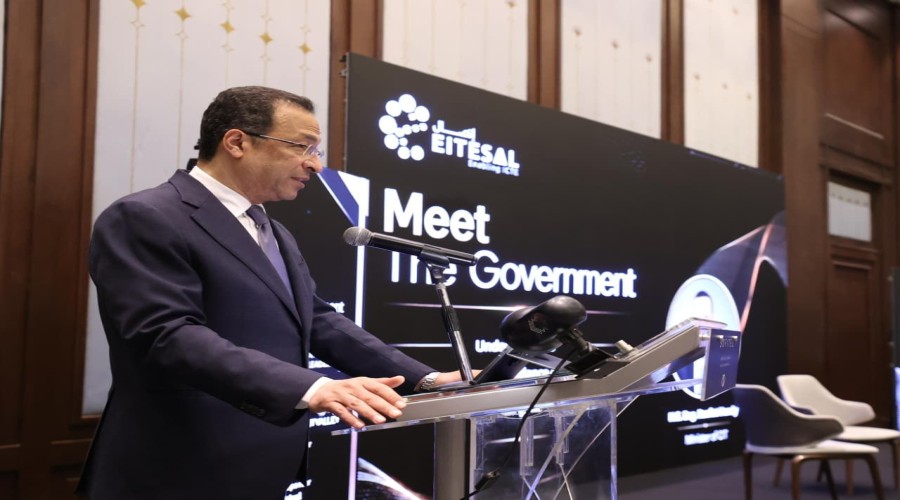
By: Nana Appiah Acquaye
Egypt’s
Minister of Communications and Information Technology, Raafat Hendy, has
outlined the government’s priorities and achievements in advancing the
country’s digital transformation agenda during the seventh edition of the “Meet
the Government” event organized by the Egyptian Information Telecommunications
Electronics and Software Alliance (EiTESAL).
The
event brought together former ICT ministers, senior government officials,
industry leaders, and representatives from Egypt’s technology ecosystem to
discuss developments in the country’s ICT sector and strategies for
strengthening digital competitiveness.
In
his address, Hendy emphasized the Ministry of Communications and Information
Technology’s commitment to building Digital Egypt as an integrated national
vision focused on improving citizens’ lives, enhancing government efficiency,
accelerating economic growth, and strengthening Egypt’s position as a global
ICT hub.

He
stated that the strategy seeks to establish a secure, inclusive, and
sustainable digital economy that supports innovation, attracts investment,
expands digital exports, and creates employment opportunities for young people
from diverse educational and professional backgrounds.
According
to the minister, the ICT sector recorded 18.9 percent growth during the third
quarter of the current fiscal year, reflecting continued strong performance
within the sector.
Hendy
highlighted several strategic priorities, including accelerating digital
transformation, promoting local technology development, expanding employment
opportunities, building digital skills, and strengthening secure digital
infrastructure. He explained that the ministry is shifting from simply
digitizing government procedures to fully digitizing citizens’ interactions
with government services.
He
noted that the Digital Egypt Platform currently offers more than 220 digital
services, with an additional 50 services expected to be launched this year. The
platform recently introduced an electronic employment record certificate in
cooperation with the Ministry of Labor.
The
minister also highlighted efforts to improve services for Egyptians abroad in
coordination with the Ministry of Foreign Affairs, International Cooperation,
and Egyptian Expatriates, as well as initiatives with the Ministry of
Investment and Foreign Trade aimed at simplifying business procedures and
improving the investment environment.
On
the technology and manufacturing front, Hendy stated that Egypt is focusing on
three strategic areas: outsourcing services, local manufacturing of mobile
phones and electronics, and the adoption of advanced technologies. He revealed
that Egypt currently hosts more than 270 outsourcing centers serving global
clients and said the country’s offshoring digital exports reached $5.2 billion
last year, with a target of $6 billion this year.
He
further disclosed that 15 mobile phone brands are now manufacturing in Egypt,
with production expected to reach 10 million devices in 2025 and exceed 15
million devices by the end of 2026.
The
minister also highlighted Egypt’s progress in artificial intelligence, noting
that the country has advanced significantly in the Government AI Readiness
Index published by Oxford Insights, becoming the top-ranked African country
after rising 60 places since 2019.

He
pointed to the development of “Karnak,” an Arabic large language model created
by engineers at the Ministry’s Applied Innovation Center to support digital
sovereignty and reflect Arab culture and Egyptian identity.
Hendy
emphasized the government’s focus on digital skills development, with plans to
train 800,000 individuals this year through various digital upskilling programs
targeting different age groups and professional backgrounds.
He
also outlined ongoing infrastructure initiatives, including the expansion of 5G
services, improvements in network coverage, replacement of copper networks with
fiber-optic infrastructure, and the extension of telecom infrastructure to
rural areas under the Decent Life initiative.
The
minister highlighted efforts to create a more investment-friendly environment
for data centers, describing them as essential to digital sovereignty and
digital transformation. He added that the ministry is working on legislative
reforms, including laws governing data accessibility, exchange, and
classification, while also collaborating with government entities to strengthen
child online safety frameworks.
Hendy
further referenced the launch of the Wa3i.net platform in partnership with the
United Nations and the National Council for Childhood and Motherhood to promote
safe internet practices among children and parents through Arabic digital
content.
He
reaffirmed Egypt’s openness to regional and international cooperation,
particularly within Africa and the Arab region, and noted his participation in
the Africa Forward Summit 2026 in Nairobi as part of the Egyptian delegation
led by President Abdel Fattah El-Sisi.
During
the event, EiTESAL Chairman Hossam Megahed highlighted the organization’s
efforts to support Egypt’s ICT industry and strengthen the competitiveness of
Egyptian companies through regional and international partnerships and
participation in global markets.
The
event concluded with a panel discussion where Hendy addressed industry
questions on artificial intelligence, outsourcing, data centers, digital
capacity building, innovation hubs, and support for small and medium-sized ICT
enterprises.