Senegal drives climate data innovation to Strengthen Environmental Governance
Date: 2026-05-19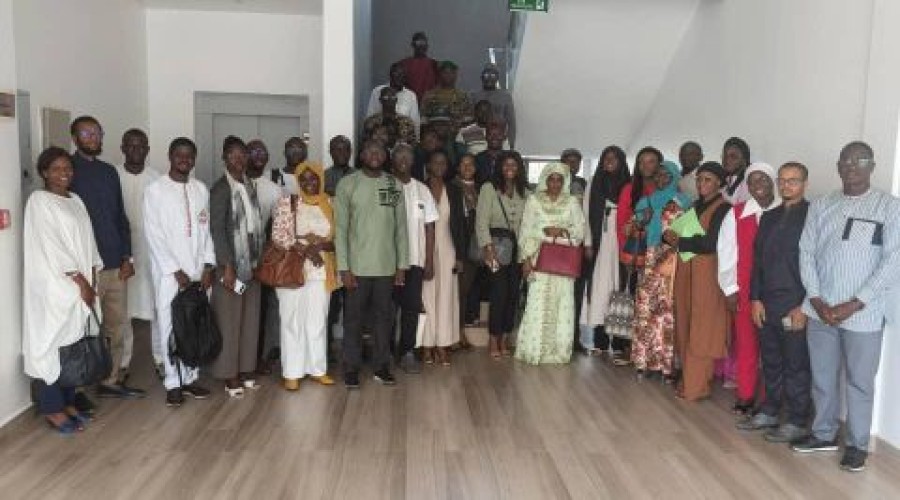
By: Nana Appiah Acquaye
Senegal
has taken a significant step toward strengthening data-driven climate
governance following a multi-stakeholder workshop held in Dakar,
bringing together more than 50 participants from the public, private, and
academic sectors to explore how climate data can be transformed into actionable
solutions.
The
event focused on advancing the use of digital tools and data systems to improve
climate monitoring, adaptation, mitigation, and green finance tracking, with
emphasis on turning fragmented information into integrated, decision-ready
insights.

Two
prototype solutions were showcased as central outputs of the initiative.
CarbonLens, a GeoAI-powered platform, was presented as a tool for real-time
monitoring of carbon stock changes across Senegal using satellite data and
artificial intelligence. The Climate Information Platform (CIP) was also
introduced as a centralized system designed to consolidate dispersed climate
data into a unified hub supporting climate action across multiple sectors.
According
to organizers, both innovations demonstrate the growing shift toward
data-driven environmental governance, enabling more effective planning and
response mechanisms in climate-related decision-making. The solutions are
expected to be developed further as scalable digital tools that can be adapted
and reused in other contexts under the Data Governance in Africa Action
framework.

The
workshop was jointly organized by Senegal’s Ministry of Environment and
Ecological Transition in collaboration with GIZ initiatives on the Data Economy
and PACO. Partners at the event emphasized the importance of collaboration in
translating data innovation into practical climate action and strengthening
Africa’s broader digital environmental governance ecosystem.