By: Nana
Appiah Acquaye
The United Nations Economic
Commission for Africa (ECA) has brought together consortium partners to launch
the implementation phase of a major regional initiative aimed at promoting
environmentally and socially responsible energy transition mineral value chains
across Southern Africa.
The project, titled
"Fostering Environmentally and Socially Responsible, Decarbonised,
Inclusive and Transformative Value Chains for Energy Transition Minerals in the
SADC Region," was officially launched on June 2, 2026. Funded by the
German Government through the International Climate Initiative, the five-year
programme will be implemented in the Democratic Republic of Congo, Mozambique,
Namibia, South Africa, Zambia and Zimbabwe.
The initiative seeks to
strengthen mineral governance, improve environmental monitoring systems,
enhance community participation, support sustainable value addition and advance
decarbonisation efforts within the mining sector.
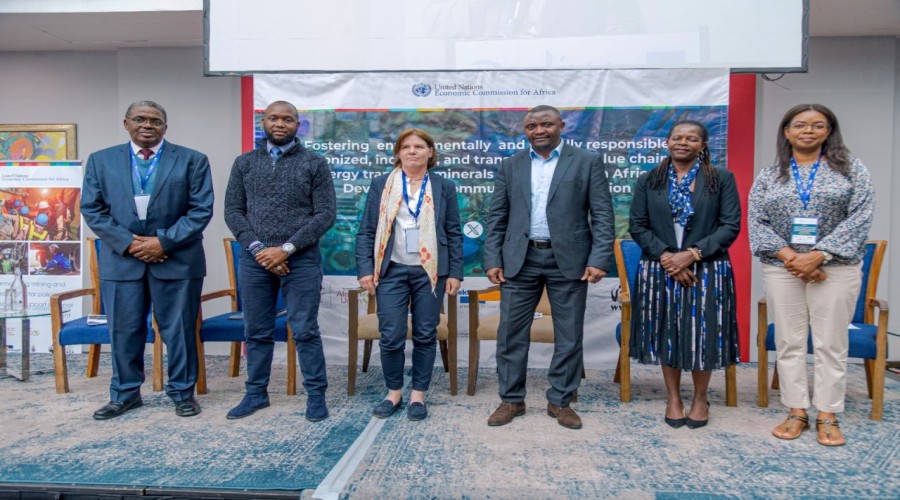
During a panel discussion
held as part of the launch, consortium partners detailed their respective roles
and contributions toward achieving the project's objectives.
Mr. Oliver Maponga of the
ECA presented the rationale and goals of the programme and moderated the
discussion. He emphasized the importance of collaboration among implementing
partners to support sustainable development and maximize the benefits of the region's
growing energy transition mineral sector.
Prof. Nellie Mutemeri of
Wits Enterprise outlined her institution's focus on policy reviews, stakeholder
engagement, green skills development and pilot projects designed to promote
mineral value addition, mine rehabilitation and the decarbonisation of mining
fleets.
Representing the African
Minerals Development Centre, Mr. Mkhululi N. Ncube stressed the importance of
aligning project activities with continental frameworks, including the Africa
Mining Vision, the Africa Green Minerals Strategy and the African Continental
Free Trade Area (AfCFTA). He noted that such alignment would help African
countries derive greater value from their mineral resources through responsible
mining and processing practices.
Dr. Gudrun Franken of the
German Federal Institute for Geosciences and Natural Resources highlighted the
organisation's role in supporting environmental and climate monitoring,
strengthening regulatory capacity and promoting climate-resilient mining practices
across participating countries.
Ms. Netsai Bollmann of WWF
Germany underscored the need for community empowerment, environmental
stewardship and equitable sharing of mining benefits. She said particular
attention would be given to women, young people and local communities affected
by mining activities.
Mr. Diderot Nguepjouo of
Projekt-Consult outlined plans to develop digital monitoring tools,
environmental oversight manuals and information management systems aimed at
improving compliance, transparency and accountability in the sector.
The consortium partners said
the project will focus on delivering four key outcomes: strengthened policy and
regulatory frameworks, improved environmental monitoring systems, enhanced
community participation and the implementation of five transformative pilot
projects across the region.
With a budget of €15
million, the programme will run from March 2026 to February 2031 and is
expected to contribute to the development of sustainable, inclusive and
decarbonised energy transition mineral value chains throughout the Southern
African Development Community (SADC) region.
This version follows a
straight-news format with a strong lead, attribution, context, and balanced
reporting tone.