By: Nana
Appiah Acquaye
The South African National
Space Agency (SANSA) is exploring new cooperation with the Space for Climate
Observatory (SCO) to strengthen the use of space and Earth observation
technologies in addressing South Africa’s climate priorities.
SANSA Chief Executive
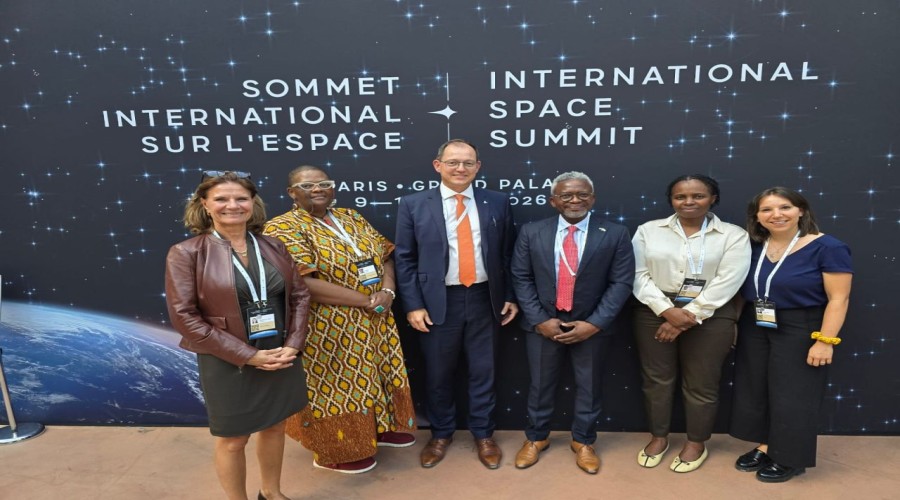
Officer Humbulani Mudau held discussions with Frederic Bretar, Head of the
Space for Climate Observatory at France’s National Centre for Space Studies
(CNES), on the sidelines of the International Space Summit in Paris.
The engagement focused on
how South Africa’s space and Earth observation capabilities can be used more
effectively to support national climate priorities while contributing to
international efforts to use space-based technologies to address climate change.
Mudau said SANSA’s
participation in the SCO provides an important platform for strengthening the
connection between the agency’s capabilities, South Africa’s national
priorities and international cooperation on climate and space.
He stressed that
international partnerships should translate into practical programmes, stronger
institutional capabilities and measurable impact within South Africa.
As a next step, SANSA is
exploring the possibility of hosting a workshop in South Africa during the
first quarter of 2027 to identify priority areas for cooperation, develop
practical programmes and establish a clearer roadmap for the agency’s
contribution to the SCO.
The proposed workshop is
expected to help define areas where SANSA and its international partners can
collaborate as climate risks and the role of space-based technologies continue
to evolve.
Mudau said climate
challenges transcend national borders and that space technologies provide
increasingly important tools for monitoring environmental change, anticipating
risks and supporting informed decision-making.
He added that international
collaboration enables countries and institutions to combine knowledge, data and
technical capabilities in ways that can strengthen national resilience while
contributing to collective responses to global climate challenges.