By: Nana Appiah Acquaye
Angola’s National Space
Program Management Office (GGPEN) and the European Space Agency (ESA) have
identified new areas of cooperation aimed at strengthening Angola’s national
space programme, with a focus on connectivity, Earth observation, skills development
and national capacity building.
The areas of potential
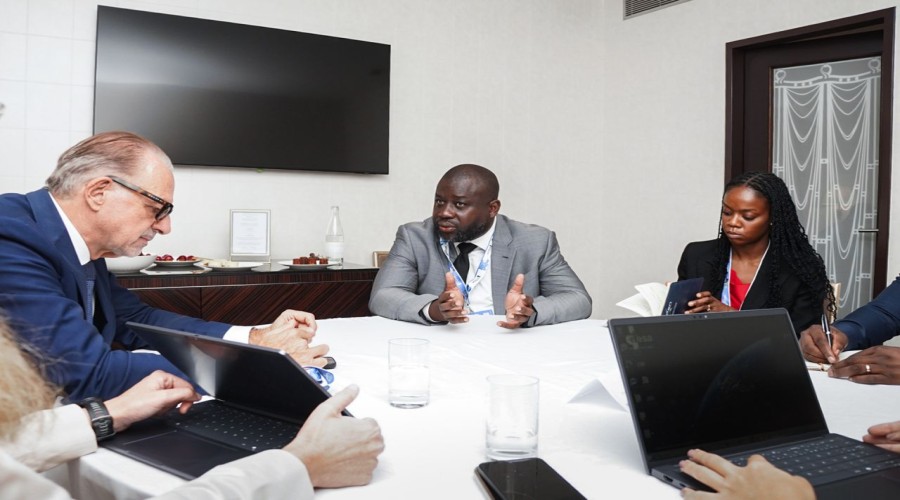
cooperation were discussed during a meeting led by GGPEN Director General Dr.
Zolana João and ESA Executive Director Dr. Josef Aschbacher. The discussions
also highlighted opportunities in youth empowerment, access to technology, startup
development and the wider application of space technologies.
During the meeting, Angola’s
experience with ANGOSAT-2 was highlighted, with the satellite having enabled
connectivity services to about 500,000 people, including communities that
previously lacked access to the internet.
A key area identified for
cooperation is the training and development of young Angolan engineers and
specialists. Proposed opportunities include technical courses, six- to
nine-month internships at ESA, practical training in Earth observation data and
participation in laboratories focused on artificial intelligence, data science,
urban planning and space applications.
Within the framework of the
ANGEO-1 programme, training is also planned for five Angolan startups involving
10 participants, alongside master’s-level training opportunities for at least
20 students.
The proposed cooperation
could also expand the use of space applications with direct benefits for
Angola’s economy and environment. Discussions included access to
high-performance computing infrastructure and cloud-based data processing,
which could strengthen the ability of Angolan professionals and institutions to
convert satellite data into practical solutions.
At the regional level,
Angola presented the SADC Shared Satellite project, an initiative that could
establish a regional satellite communications infrastructure involving all 16
SADC member states.
ESA suggested linking the
initiative with the European Commission, which could potentially provide
specialised technical assistance to support the project.