By: Nana
Appiah Acquaye
Egypt’s Ministry of
Communications and Information Technology (MCIT) has signed a Memorandum of
Understanding (MoU) with global computing and artificial intelligence company
Intel to strengthen AI literacy and train one million citizens annually over
three years.
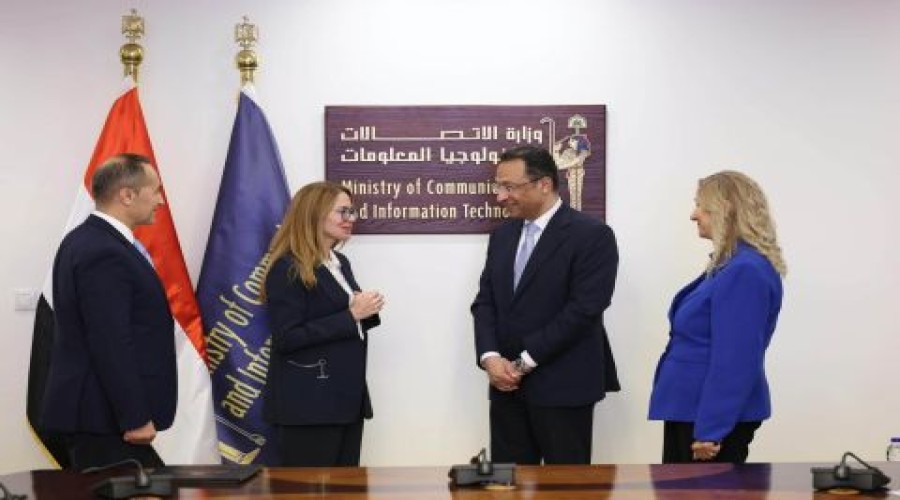
The agreement, witnessed by
Minister of Communications and Information Technology Raafat Hendy, will
support programmes aimed at raising public awareness of artificial
intelligence, developing national talent and promoting the safe and responsible
use of AI technologies.
The signing ceremony was
attended by Intel Europe, the Middle East and Africa General Manager Gisselle
Ruiz Lanza and senior officials from MCIT and Intel. The MoU was signed by Hoda
Baraka, Advisor to the ICT Minister for Technology Talent Development and
Acting Director of the Egyptian Center for Responsible AI (ECRAI), and Taha
Khalifa, Intel’s General Manager for the Middle East and Africa.
Under the partnership, one
million citizens will receive AI training each year for three years, with
training content made available through digital platforms to expand access. The
programmes will focus on AI concepts, applications and the safe and responsible
use of technology, while also promoting digital trust.
The collaboration includes
Intel’s “AI for Citizens” programme, which is designed to simplify AI concepts
and help different segments of society understand and apply the technology
according to their needs. Another initiative, “Digital Trust for All,” will
promote responsible and secure use of digital technologies.
Speaking at the signing,
Hendy said AI has become a key driver of economic competitiveness, contributing
to development and improvements in public services. He said Egypt’s Second
Edition of the National Artificial Intelligence Strategy (2025–2030) seeks to
maximise the benefits of AI and increase its economic and social impact.
Hendy said cooperation with
global AI leaders would be important in translating the objectives of the
national strategy into practical programmes, building national capabilities and
enabling citizens to benefit from AI applications as Egypt advances its digital
transformation agenda.
The Minister also
highlighted MCIT’s focus on increasing public awareness of the safe and
responsible use of AI while equipping citizens with the skills required to
adapt to an increasingly digital economy.
Lanza said the partnership
reflects a shared ambition to make AI more accessible, practical and beneficial
to citizens through the launch of Intel’s “AI for Citizens” programme.
Baraka said the
collaboration would strengthen efforts to raise awareness of AI applications
and help different groups understand the capabilities of the technology and
apply them to their specific needs. She added that the partnership would also
create a pool of qualified trainers capable of transferring knowledge and
expanding access to AI training.
The training will
incorporate responsible AI awareness alongside technical skills, with Baraka
stressing the importance of ensuring that citizens understand how to use AI
safely and responsibly.
Khalifa said Intel was
seeking to widen participation in the AI economy by equipping people with
relevant skills and building confidence in the use of AI. The programmes will
target young people, educators, businesses and organisations and support the application
of AI to real-world challenges.
The partnership will also
establish a Training of Trainers programme targeting 1,500 trainers over three
years, with 500 trainers expected to be trained annually. The programme is
intended to support knowledge transfer, sustain AI training initiatives and
strengthen the capacity of local education and training institutions.
Additional capacity-building
programmes will target different groups, including juniors and young people who
will receive foundational AI skills and creative-thinking training. Technical
and university students will receive programmes aimed at improving labour-market
readiness, while employees and job seekers will have access to reskilling and
upskilling opportunities.
The partnership will also
include a programme designed to support government leaders in
technology-enabled decision-making.
MCIT and Intel will develop
a phased implementation plan for the agreed programmes, beginning with “AI for
Citizens”. The agreement also provides for technical workshops and training
sessions covering Intel’s latest AI infrastructure and computing technologies
to strengthen national expertise in AI infrastructure.
Outstanding participants
will also have the opportunity to take part in an annual AI hackathon and
prepare to showcase their projects and innovations at the Intel AI Global
Impact Festival.