By: Kanto
Kai Okanta
The African Union has called
for affordability to be placed at the centre of efforts to expand access to
clean cooking in Africa, stressing the need for solutions that are affordable,
reliable and safe while reflecting national circumstances.
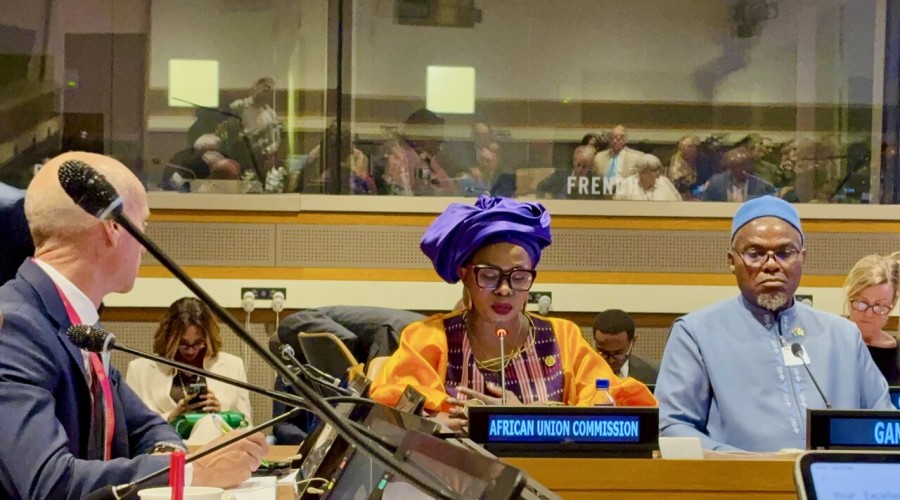
The AU Commissioner for
Infrastructure and Energy, H.E. Lerato D. Mataboge, made the call during a
high-level clean cooking event convened by Kenya and Norway at the United
Nations Headquarters in New York on the margins of the 81st United Nations
General Assembly.
The event was opened by Dr
Fatih Birol, Executive Director of the International Energy Agency, and
featured remarks from Kenyan President William Ruto and Norwegian Prime
Minister Jonas Gahr Støre. It sought to build support for clean cooking ahead
of COP31 and the Second Summit on Clean Cooking in Africa. President Ruto
recalled the nearly US$900 million in new financial commitments welcomed at a
virtual meeting hosted by Kenya and Norway in July.
Commissioner Mataboge said
Africa needs a range of affordable, reliable and safe cooking solutions,
arguing that financing decisions should consider health outcomes, affordability
and environmental performance without excluding viable options solely because
of their energy source.
She also stressed that
affordability must extend beyond the initial cost of a stove or cooking
equipment. The AU Commissioner said the focus should include whether households
can continue to afford the recurring costs of cooking, including the next cylinder
refill or electricity payment.
She called for national
programmes to cover the continuing cost of cooking alongside equipment, with
targeted support for vulnerable households, consumer finance and reliable
distribution systems.
The Commissioner further
called for investment across the entire clean cooking delivery system. The
African Union is supporting the International Energy Agency’s investment
framework for universal access and is calling on development finance
institutions to expand concessional finance, guarantees and project preparation
support.
She also emphasised that
clean cooking investment should contribute to Africa’s productive capacity by
supporting African enterprises involved in manufacturing equipment, assembling
appliances, distributing fuels and providing maintenance services.
According to the
Commissioner, procurement should also create opportunities for businesses led
by women and young people, ensuring that the transition to clean cooking
contributes to wider economic participation.
Through the African Union,
the continent is seeking stronger coordination around national priorities,
partner support aligned with country investment plans and regular reporting on
financing disbursed, households reached, affordability and continued use.
The Infrastructure and
Energy Department, in implementing Agenda 2063, will carry these priorities
into its work with Member States and partners towards the Second Summit on
Clean Cooking in Africa, with the aim of directing resources to areas where
progress remains slowest.