By: Kanto
Kai Okanta
Uganda’s Minister of ICT and
National Guidance, Rt. Hon. Justine Kasule Lumumba, has called for research to
remain at the centre of policy development and implementation, warning against
treating evidence generation as a luxury or discretionary priority.
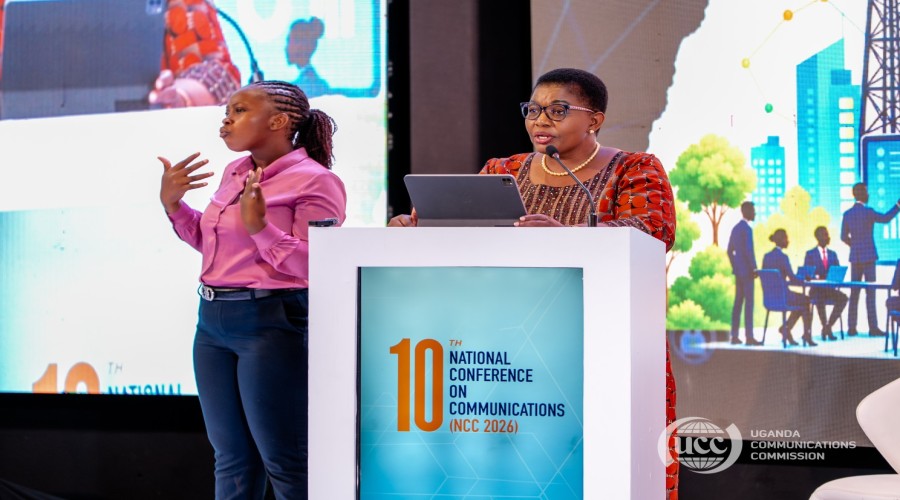
Speaking at the opening of
the 10th National Conference on Communications (NCC 2026) at Makerere
University, Lumumba said research must provide the foundation for government
policy and private-sector development initiatives by helping stakeholders
understand challenges, identify gaps, track emerging trends and make informed
decisions.
“Before we can develop
effective solutions, we must first understand the challenges we seek to
address. Research provides the evidence we need to identify gaps, understand
emerging trends, test ideas and make informed decisions,” she said.
She said government policies
and programmes are most effective when grounded in evidence, cautioning that
decisions based on assumptions risk producing solutions that do not fully
address the problems they are intended to solve.
Referring to the conference
theme, “Accelerating Market-Driven Research and Innovation for Uganda’s
Development,” Lumumba said research should go beyond the production of
knowledge and translate into ideas, innovations and solutions that address real
challenges and create value for society and the economy.
“The question, therefore, is
not simply whether we are conducting research, but whether our research is
solving problems, creating opportunities and generating value,” she said.
The conference was organised
by the Uganda Communications Commission (UCC) in partnership with Makerere
University’s College of Engineering, Design, Art and Technology (CEDAT).
Lumumba commended the
resilience of the National Conference on Communications, describing its tenth
edition as a significant achievement at a time when many initiatives struggle
to sustain momentum. She also praised UCC for maintaining the conference and
Makerere University for its continued contribution to research, innovation and
knowledge-sharing in Uganda’s communications sector.
The Minister reaffirmed the
government’s commitment to using Information and Communication Technologies to
drive economic transformation, improve public service delivery and enhance the
quality of life of Ugandans.
She noted that Science,
Technology and Innovation is one of four strategic pillars identified to
support the government’s ambitious ten-fold economic growth agenda, alongside
Agro-Industrialisation, Tourism Development and Mineral-Based Industrialisation.
According to Lumumba, the
inclusion of Science, Technology and Innovation among the priority areas
underscores the importance of research, technology and innovation in
transforming Uganda’s economy.
She, however, cautioned that
technological advancement presents both opportunities and challenges. While
digital technologies are creating new opportunities for communication,
innovation, service delivery and economic growth, they can also be exploited for
cybercrime, online harassment, hate speech, misinformation and child
exploitation.
She said addressing these
challenges requires informed policy, effective regulation, responsible
innovation and continuous research, supported by stronger collaboration among
government, academia, industry and civil society.
UCC Executive Director, Hon.
Nyombi Thembo, said the National Conference on Communications is built around
three core objectives: advancing research and innovation, fostering dialogue
and building connections.
He said the conference
provides a national platform for showcasing peer-reviewed research addressing
Uganda’s ICT challenges and identifying potential solutions, while bringing
together policymakers, industry experts, academics and other stakeholders to exchange
ideas and engage in constructive dialogue.
Thembo added that the
conference creates networking opportunities linking emerging professionals and
young innovators with experienced practitioners, researchers and leading
training institutions.
He thanked Makerere
University, particularly CEDAT and its leadership, for continued support and
collaboration, noting that the institution has hosted more editions of the
conference than any other institution during its ten-year history.
The ICT Club Competition was
also highlighted as one of the key attractions of NCC 2026, providing secondary
school students with an opportunity to develop and showcase ICT-based solutions
to real-world challenges.
The two-day conference also
featured exhibitions showcasing ICT innovations, technologies, products and
services, giving innovators, researchers, students and industry players an
opportunity to demonstrate practical solutions and engage with participants.
Thembo reaffirmed UCC’s
commitment to facilitating and enabling ICT development, saying the Commission,
guided by its vision of an inclusive digital economy, would continue working
with stakeholders to ensure digital transformation creates meaningful opportunities
for Ugandans.
Earlier, Prof. Moses
Musinguzi, Principal of CEDAT, welcomed participants on behalf of Makerere
University Vice Chancellor, Prof. Barnabas Nawangwe. He thanked UCC for its
continued confidence in Makerere University and CEDAT and called for deeper
collaboration among academia, government and industry.
Over the two-day conference,
participants examined research commercialisation, innovation ecosystems, shared
digital infrastructure, policy and regulation, and the role of connectivity in
unlocking economic opportunities. Discussions also explored how digital
services are creating new markets in Uganda and the potential of artificial
intelligence to drive social and economic development.
Other partners supporting
NCC 2026 included American Tower Corporation, NITA-Uganda, the Uganda National
Bureau of Standards, Kilimanjaro Telecom, Roke Telecom and the Research and
Education Network for Uganda (RENU), among others.