By: Van
Soul Addey
President John Dramani
Mahama has called on African countries to take greater ownership of their
health systems by increasing domestic investment, strengthening local
pharmaceutical production and reducing reliance on externally designed
healthcare frameworks.
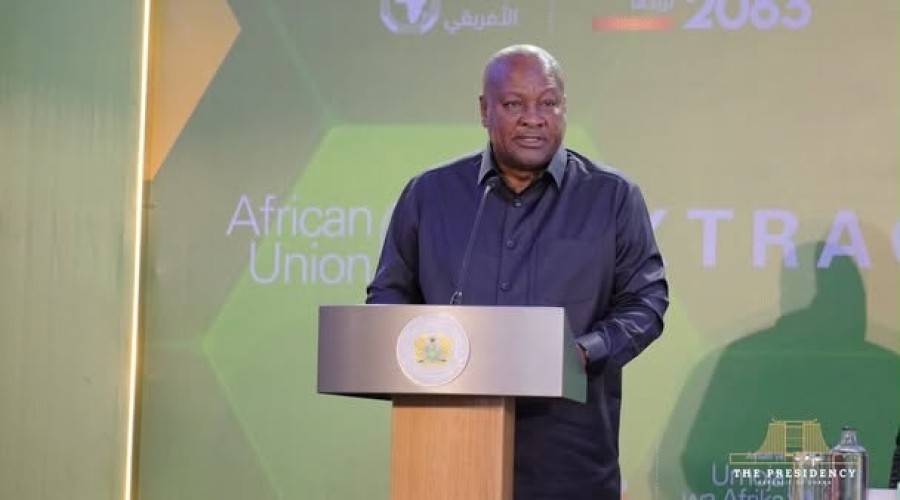
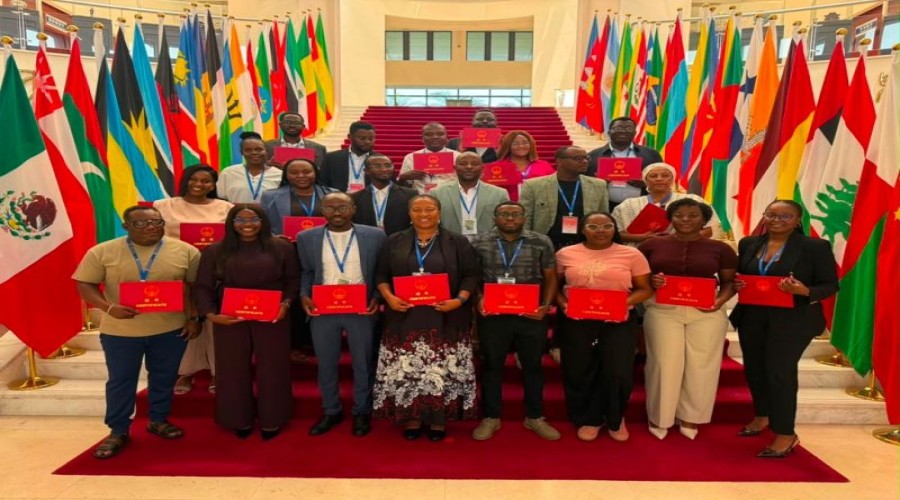
Speaking at the African
Union Extraordinary Summit on Universal Health Coverage and Ending AIDS in
Accra, President Mahama said Africa must move beyond being a passive recipient
of global health interventions and become a leading force in shaping its own
healthcare future.
He noted that declining
global health assistance, which he said had reduced from $50 billion to $39.1
billion within one year, should serve as a motivation for African governments
to build more self-reliant and sustainable health systems.
According to the President,
Africa has the human capital, resources and continental market opportunities,
including those created through the African Continental Free Trade Area
(AfCFTA), to expand local medicine manufacturing, improve healthcare infrastructure
and strengthen health security.
Mahama described the pursuit
of healthcare independence as a new form of liberation focused on tackling
disease, inequality and dependency.
He highlighted Ghana’s
efforts through initiatives including the Accra Reset Initiative and Mahama
Cares, saying the country is committed to demonstrating leadership in improving
healthcare outcomes.
The President also urged
African governments to fulfil commitments under the Abuja Declaration by
increasing and sustaining investments in the health sector.
He stressed that achieving
universal health coverage and ending AIDS on the continent will require
collective action, stronger policy commitments and measurable investments from
governments.
Mahama said Africa must
become the architect of its own health destiny by developing systems that are
resilient, inclusive and capable of meeting the needs of its people.