By: Nana Appiah Acquaye
The Senior
Manager for Financial Operations at MobileMoney Fintech LTD (MMFL), Makafui K.
Mattah, has underscored the need for Ghanaian students to embrace lifelong
learning and acquire future-ready skills to meet the changing demands of the
global labour market.
According to
him, the rapid pace of technological advancement and the evolving nature of
work require young people to move beyond academic qualifications by developing
practical digital, technical and interpersonal competencies that will enable
them to remain relevant, competitive and productive in an increasingly
technology-driven economy.
He said
graduates who continuously invest in self-development, embrace innovation and
adapt to changing workplace expectations will be better positioned to secure
meaningful employment, create value for organisations and take advantage of
opportunities within the global digital economy.
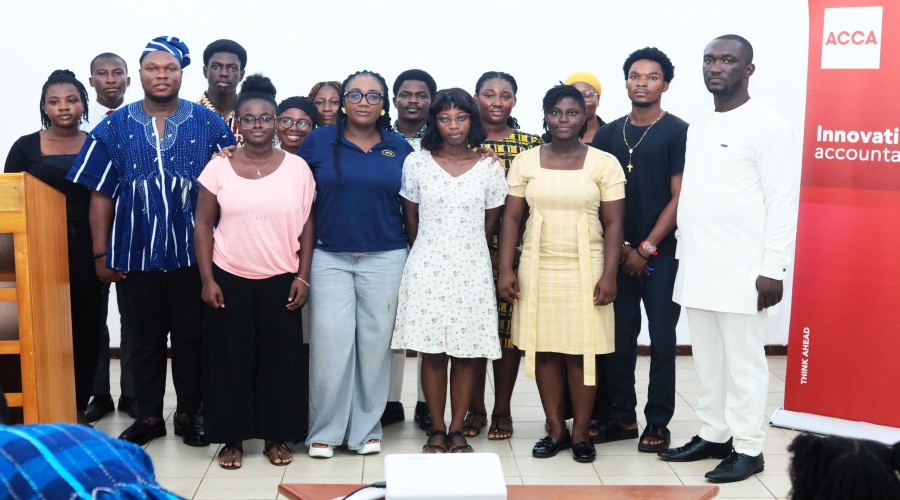
Mr Mattah was
speaking at the 2026 National Youth Mentorship Summit (NYMS) held at the
Centre for Biodiversity and Conservation Auditorium of the University of Ghana,
where MobileMoney Fintech LTD, as part of its commitment to advancing youth
empowerment and preparing the next generation of professionals for the digital
economy, equipped hundreds of students with practical insights into digital,
technical and interpersonal skills needed to bridge the gap between academic
education and industry expectations.
The
intervention formed part of the company's broader efforts to empower young
people with industry-relevant knowledge, strengthen their career readiness and
position them to seize emerging opportunities in an increasingly competitive
labour market.
Future of Work
Speaking on the
theme of preparing young people for the future workplace, Mr Mattah said the
world of work is undergoing unprecedented transformation, with technological
innovation reshaping industries and redefining the skills employers expect from
graduates.
He observed
that rapid technological advancement has fundamentally transformed workplaces
worldwide, making continuous learning and skills development indispensable for
young people seeking sustainable careers.
According to
him, employers are increasingly looking beyond academic qualifications, placing
greater value on candidates who possess practical competencies, professional
certifications, industry experience and the ability to solve real-world
problems.
"The job
market you are entering today is very different from the one our parents
entered. Technology has transformed the workplace, and employers now want
people who can demonstrate skills and deliver results," he said.
Mr Mattah
explained that while university degrees remain important, they are no longer
sufficient on their own to guarantee employment, as organisations now seek
graduates who can immediately contribute value in the workplace.
He urged
students to adopt a mindset of continuous improvement, stressing that lifelong
learning has become a necessity rather than an option for anyone seeking
long-term career success.
Digital and
Soft Skills
Mr Mattah
identified artificial intelligence (AI), cybersecurity, digital literacy, data
analytics and big data as some of the fastest-growing skills shaping the future
of work, urging students to embrace digital transformation and position
themselves for opportunities within the global knowledge economy.
He said the
growing adoption of emerging technologies across industries presents enormous
opportunities for young people who are willing to acquire relevant digital
competencies and remain adaptable to change.
Beyond
technical expertise, he encouraged students to develop essential soft skills,
including communication, critical thinking, creativity, adaptability, teamwork
and resilience, stressing that these competencies often distinguish outstanding
professionals from the rest.
"Technical
skills may get you hired, but your human skills are what will keep you in the
organisation, earn promotions and build trust with employers," he stated.
Mr Mattah noted
that organisations increasingly value employees who can communicate
effectively, solve problems creatively, collaborate with diverse teams and
demonstrate emotional intelligence in the workplace.
Bridging the
Skills Gap
Mr Mattah
challenged the notion that Ghana lacks employment opportunities, arguing that
the country's biggest challenge is the mismatch between available jobs and the
skills possessed by many job seekers.
"There are
jobs in Ghana. The challenge is whether applicants have the skills required to
fill those positions," he noted.
To address the
skills gap, he encouraged students to leverage online learning platforms and
professional development opportunities, including the MTN Ghana Foundation
Skills Academy, Coursera, Udemy, ALX and YouTube, to acquire globally
recognised certifications and industry-relevant knowledge.
He further
advised students to pursue internships, volunteer opportunities and personal
projects to gain practical experience, strengthen their portfolios and
demonstrate their capabilities to prospective employers.
Mr Mattah said
communication remains one of the most valuable workplace skills, enabling
professionals to articulate ideas effectively, collaborate with colleagues,
influence decision-making and confidently present their achievements.
He urged
students to embrace lifelong learning and continuously invest in
self-development to remain competitive in an ever-changing global economy.
"Your
degree is only the beginning. Continue learning, acquire new skills and stay
ahead of the changing demands of the global job market," he advised.
Success Africa
Reaches Over 400,000 Young People
Executive
Director of LEC Group and organiser of the summit, Albert Kusi, described
Success Africa as a flagship youth mentorship initiative established to
inspire, equip and empower young people to become transformational leaders
capable of driving national development.
He said the
initiative began nearly two decades ago as a student-led project at the
University of Cape Coast (UCC) with the vision of raising leaders of integrity,
purpose and impact.
According to
him, Success Africa has grown into one of Ghana's leading youth mentorship
platforms, reaching nearly 100 educational institutions and impacting more than
400,000 young people nationwide.
Mr Kusi
explained that the initiative was established to bridge the gap between
academic education and industry expectations by exposing students to practical
employability skills, entrepreneurship, leadership development and innovation.
He noted that
the programme also promotes volunteerism, personal development and mindset
transformation while connecting students with accomplished professionals who
share practical experiences, career lessons and mentorship.
Mr Kusi
encouraged young people to discover their purpose, maximise their talents and
use their abilities to create value for society through innovation,
entrepreneurship and leadership.
Reflecting on
the growth of the initiative, he said his passion for mentoring young people
has driven him to engage students across Ghana for nearly two decades through
leadership conferences, mentorship programmes and campus outreach activities.
He disclosed
that the 2026 National Youth Mentorship Summit marked the grand finale of a
13-campus nationwide mentorship tour, which commenced in February and concluded
at the University of Ghana after engaging thousands of tertiary students.
Mr Kusi
announced that the initiative would continue later this year with another
nationwide outreach programme targeting newly admitted university students to
deepen mentorship, leadership development and entrepreneurship among Ghana's
youth.
Summit
The National
Youth Mentorship Summit, organised by LEC Group in partnership with the Success
Africa Foundation, has become one of Ghana's leading youth empowerment
platforms, connecting students with accomplished industry leaders and
professionals to provide practical insights into leadership, career
development, financial literacy, entrepreneurship and innovation.
Held under the
theme "Youth Innovation & Wealth Creation: Shaping Ghana's
Future," the 2026 edition brought together students, entrepreneurs,
innovators, business executives and professionals to explore how innovation,
entrepreneurship and leadership can drive Ghana's socio-economic transformation
and create opportunities for the country's growing youth population.
This year's
summit received support from MTN, InvestCorp, UBA, Prudential Bank, ACCA, Malta
Guinness and Skytech Ghana, reflecting the private sector's growing commitment
to investing in youth development, promoting digital skills and preparing the
next generation of Ghanaian innovators, entrepreneurs and business leaders for
the future of work.