By: Nana Appiah
Acquaye
Vodacom and the University
of Johannesburg (UJ), in collaboration with Amazon Web Services (AWS), have
extended their artificial intelligence (AI) partnership through the AI for
Africa Hackathon Challenge, giving students an opportunity to develop AI-driven
solutions to real-world societal challenges.
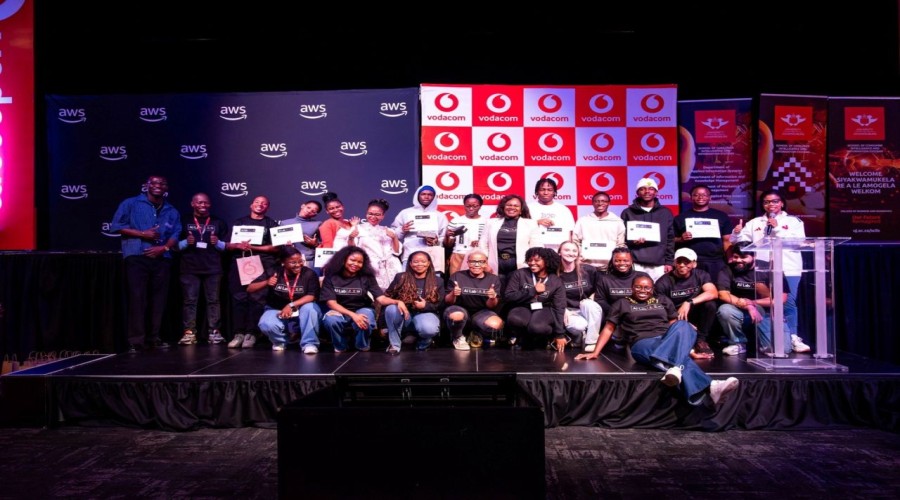
Held at Vodacom World in
Johannesburg on Monday, 12 October 2026, the hackathon attracted more than 150
student sign-ups and focused on challenges across education, health, maternal
health, community safety, gender-based violence and femicide, youth employment,
accessibility and inclusion, water security and agriculture.
The hackathon is the first
milestone in the partnership, announced in July 2026, which brings together
industry, academia and cloud technology to strengthen South Africa’s pipeline
of job-ready AI and data science talent.
“The first project launched
as part of this partnership focused on UJ Master's students within the
university's Centre for Applied Data Science. With this hackathon, which more
than 150 students signed up for, this partnership is now also reaching undergraduate
and masters students pursuing further education to equip them to be at the
cutting edge of developing Africa's AI capabilities,” said Charlotte Kepadisa,
Managing Executive of Big Data, AI and Robotic Process Automation (RPA) at
Vodacom Group.
The initiative reflects
Vodacom's commitment to developing AI capabilities and preparing young people
for the future digital economy. By extending the collaboration to students
earlier in their careers, the challenge added a practical, hands-on learning opportunity
to the partnership's existing focus on co-designed learning programmes,
postgraduate research and industry mentorship.
The AI for Africa Challenge
centred on practical application, enabling students to explore how AI can
address challenges relevant to Africa while developing skills to support their
future employability. It also provided a platform for young innovators to
demonstrate their ideas and engage with technologies and approaches shaping the
future of business and society alongside AI leaders from Vodacom and AWS.
“Building Africa's AI
capabilities requires investment in people as well as technology,” Kepadisa
said.
“Through the AI for Africa
Challenge, students apply what they have learned to real-world problems,
gaining practical experience and confidence to develop their ideas. Supporting
these students reflects Vodacom's commitment to nurturing talent. This commitment
extends to our people strategy, through which we invest in learning,
development and skills programmes that prepare our employees for the
opportunities of tomorrow.”
Badiswa Motsa, an
18-year-old first-year Business Information Technology student, said her
lecturer had encouraged her to participate in the hackathon while she was
working on an application development project.
“Currently we're working on
a project where we're developing an app, and my lecturer suggested we take part
in the hackathon as we may learn something that can be used in developing our
app,” Motsa said.
She said the experience had
broadened her understanding of the skills required to develop practical
solutions.
“When we came here we
actually thought this is more about coding, but there's actually different
levels to this because you have to think about the business side, the back-end,
the front-end, and how is this actually going to help people,” she said.
Dione Gwara, 19, a
first-year Business Information Technology student, said he joined the
hackathon to gain additional coding experience and showcase his talent.
Makabelo Pitso, a first-year
BCom Information Systems student, said she hoped to gain knowledge about how
hackathons work and understand how the industry operates in practice, including
how students could apply what they learn in school to build usable solutions.
Under the broader
partnership, UJ's School of Consumer Intelligence and Information Systems,
through its Centre for Applied Data Science, supports co-designed learning
programmes, postgraduate research and industry mentorship. The collaboration
combines Vodacom's industry experience with UJ's academic expertise and AWS's
cloud, data and AI capabilities.
The partnership also
includes research into practical digital challenges. UJ master's students are
conducting Vodacom-aligned research into autonomous AI systems that could help
detect, analyse and respond to cyber threats across telecommunications networks.
Further research is
exploring blockchain-based approaches to digital identity management and the
prevention of identity theft.
AWS supports the
collaboration by providing access to cloud, data and AI technologies and
computing resources, enabling students and researchers to experiment, build and
test solutions.
Vodacom, UJ and AWS aim to
connect African expertise with African opportunities and help develop a new
generation of innovators equipped to contribute to the continent's digital
future.