UN Commission on Science and Technology for Development outlines global policy priorities at 29th Session in Geneva
Date: 2026-05-04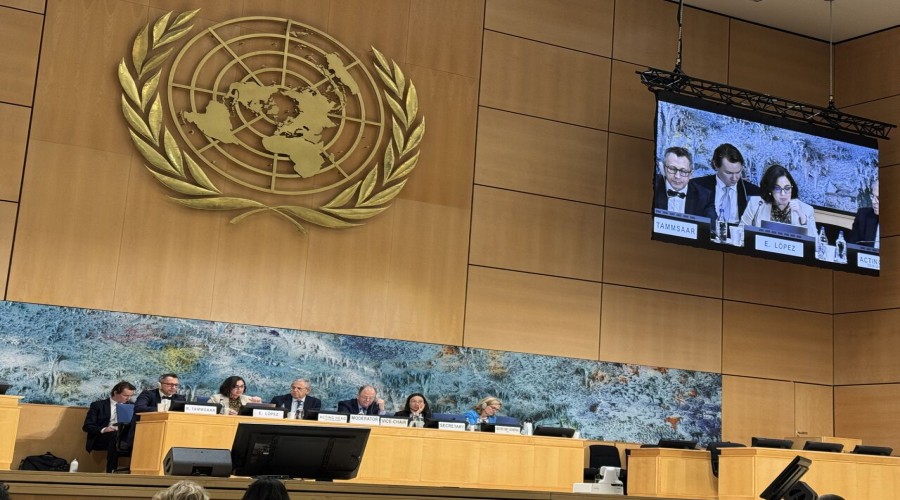
By: Robert Kwaku Annor
The
29th session of the United Nations Commission on Science and Technology for
Development (CSTD) has convened in Geneva, bringing together policymakers and
experts to address the evolving role of science, technology, and innovation in
global development.
The
session covered a broad range of interconnected policy areas, including
science, technology and innovation (STI) for development, artificial
intelligence governance, data governance, technical cooperation, and follow-up
to the World Summit on the Information Society (WSIS). Discussions also
included informal consultations on draft resolutions and a closing plenary.

A
central feature of the session was the ministerial roundtable, which aligned
closely with the agendas of the United Nations Economic and Social Council
(ECOSOC) and the High-Level Political Forum, particularly in relation to
Sustainable Development Goal 9 and Sustainable Development Goal 17. The
discussions focused on the role of STI in driving productivity, industrial
development, infrastructure resilience, sustainable urbanisation, and energy
transitions, while also addressing persistent challenges such as uneven
innovation capacities, digital divides, and fragmented national innovation
systems.
The
ministerial segment brought together a diverse group of government officials,
reflecting varying national approaches to governance in the STI sector.
Participants included Noureddine Ouadah, Marie Thérèse Sombo Ayane Safi, Blade
Nzimande, Ernesto Rodríguez Hernández, Mohammad Mohsen Sadr, Shaukat
Abdulrazak, Nilsa Sandra Miquidade, Michał Gramatyka, and Mohd Sijiamini Mohd.
The
discussions highlighted differences in how countries structure governance for
innovation, with some placing STI under dedicated science and technology
ministries, while others integrate it within digital affairs, communications,
higher education, or broader economic portfolios. Algeria’s model, featuring a
dedicated ministry for the knowledge economy, start-ups, and micro-enterprises,
was cited as a distinctive approach to shaping innovation policy.

Further
deliberations focused on the role of STI in the age of artificial intelligence,
with participants examining issues related to AI governance, research and
development, and international coordination. The session explored initiatives
such as global dialogue platforms on AI governance and proposals for
international scientific collaboration frameworks.
Participants
also addressed the implications of AI for innovation policy, including the need
for adaptive regulatory systems, strengthened data governance, and expanded
capacity-building efforts. The importance of open science and international
cooperation was emphasised as critical to ensuring equitable access to
technological advancements.
The
session reinforced the growing importance of coordinated global action in
leveraging science and technology to achieve sustainable development, while
addressing emerging challenges in digital transformation and innovation
governance.