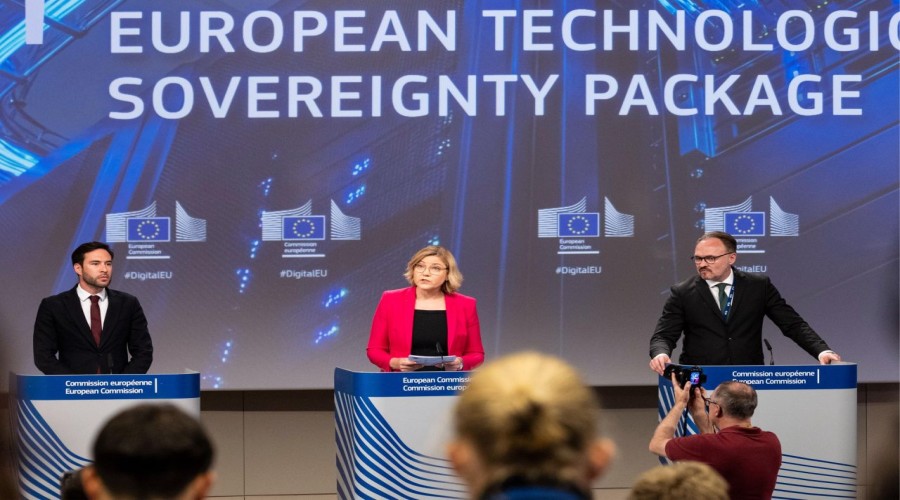
By: Nana Appiah Acquaye
The European Union has
introduced a comprehensive Tech Sovereignty Package aimed at strengthening the
bloc's technological independence, boosting innovation, and enhancing
resilience across critical digital infrastructure and emerging technologies.
The initiative, presented by
Executive Vice-President for Tech Sovereignty, Security and Democracy Henna
Virkkunen, outlines an integrated strategy designed to reinforce Europe's
capabilities in semiconductors, cloud computing, artificial intelligence, open-source
technologies, and sustainable digital infrastructure.
According to the European
Commission, the package represents a significant shift in the EU's approach to
technology policy by bringing together interconnected initiatives that span the
entire digital value chain.
A key component of the
package is the proposed Chips Act 2.0, which seeks to expand Europe's
semiconductor manufacturing capacity and strengthen innovation in strategic
industries that rely on advanced chip technologies.
The strategy also includes a
Cloud and AI Development Act intended to improve Europe's resilience and
autonomy in cloud services and artificial intelligence, while supporting the
development of secure and competitive digital infrastructure.
In addition, the European
Union plans to strengthen the adoption of open-source technologies through a
dedicated EU Open Source Strategy, particularly in sectors considered critical
to economic competitiveness and public services.
Another pillar of the
package is the Strategic Roadmap for Digitalisation and Artificial Intelligence
in Energy, which aims to integrate data centres more effectively into Europe's
energy system while promoting sustainability, transparency, and efficient
resource management.
Officials said the Tech
Sovereignty Package is designed to build on the EU's existing strengths by
aligning multiple policy initiatives under a single strategic framework that
supports technological innovation, digital security, and economic competitiveness.
The European Commission
noted that the integrated approach will help reinforce Europe's digital
ecosystem by connecting investments in hardware, software, cloud
infrastructure, artificial intelligence, and open-source technologies.
The initiative forms part of
the EU's broader efforts to enhance technological sovereignty, reduce strategic
dependencies, and position Europe as a global leader in the development and
deployment of next-generation digital technologies.