By: Nana
Appiah Acquaye
The Governor of the Bank of
Ghana, Johnson Pandit Asiama, has underscored Ghana’s economic recovery journey
and the importance of strengthening domestic debt markets to enhance financial
resilience across African economies.
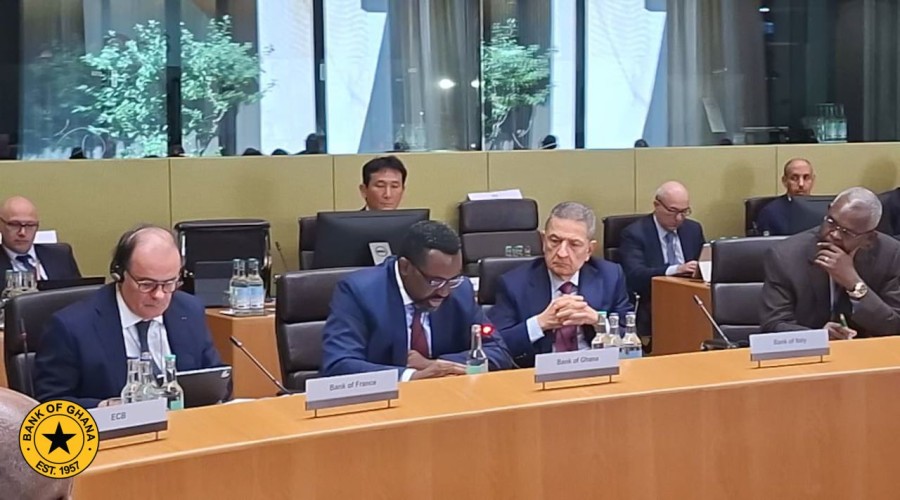
He made the remarks at the
Bank for International Settlements (BIS) Roundtable of Governors from African
Central Banks held on 27 June 2026 in Basel, where senior central bank leaders
convened to discuss macroeconomic stability, financial systems development, and
regional monetary policy challenges.
Governor Asiama reflected on
Ghana’s transition from economic crisis to recovery, highlighting key lessons
learned in the process, particularly the increasing role of domestic debt
markets in supporting fiscal and financial stability.
He noted that domestic
borrowing has become a critical instrument for many African economies,
especially in the context of reduced access to external financing and evolving
global financial conditions.
According to him, the
development of deeper and more diversified capital markets is essential to
ensuring that domestic financing supports sustainable economic growth while
preserving the effectiveness of monetary policy transmission.
He further emphasized that
financial stability must remain a central consideration as African economies
expand reliance on domestic funding sources, warning that poorly structured
debt markets could undermine long-term macroeconomic resilience.
The Governor’s remarks
contributed to broader discussions among African central bank leaders on
strengthening financial systems, improving debt management frameworks, and
enhancing regional cooperation to support economic stability.
The BIS Roundtable provided
a platform for policymakers to exchange experiences on navigating global
financial pressures while building more robust and adaptive domestic financial
markets.
Participants reiterated the
importance of sound policy frameworks, institutional capacity building, and
coordinated reforms to ensure that African economies can sustain recovery and
maintain long-term financial stability in an increasingly complex global
economic environment.