By: Nana Appiah Acquaye
Botswana has officially
become the 68th signatory to the Artemis Accords, marking a significant
milestone in the country's growing engagement in international space
cooperation and its expanding national space programme.
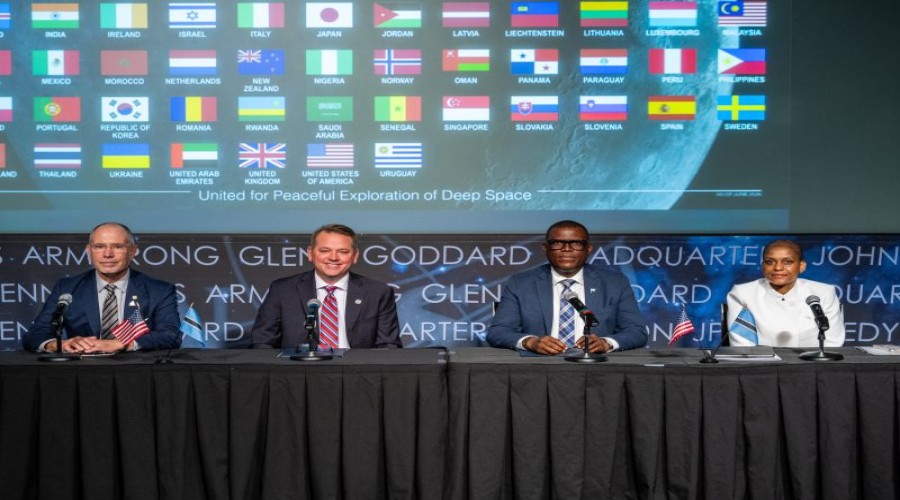
Botswana's Minister of
Communication and Innovation, David Tshere, signed the Artemis Accords on
behalf of the Republic of Botswana during a ceremony held on 25 June 2026 at
the Mary W. Jackson NASA Headquarters in Washington, D.C.
The signing ceremony was
witnessed by NASA Deputy Administrator Matthew Anderson and U.S. Department of
State Senior Advisor for Space Greg Autry, who joined officials in welcoming
Botswana to the international framework for responsible space exploration.
The Artemis Accords,
launched in 2020 by the United States and seven partner nations, establish a
set of principles to guide the peaceful, transparent, and sustainable
exploration and use of outer space. The framework has continued to expand,
attracting 68 signatory countries from around the world.
The U.S. Department of State
said Botswana's accession reflects the growing international commitment to
cooperation in space exploration and the continued global appeal of the
Accords' vision for responsible activities beyond Earth.
Botswana's participation
follows a major achievement in its national space programme after the
successful launch of its first satellite, BOTSAT-1, in March 2025. The
satellite was launched aboard a SpaceX rocket from Vandenberg Space Force Base
in California, marking the country's entry into the space sector.
Commenting on the
development, Michael Overby, Deputy Director of Space Affairs for Global
Partnerships and Technology Policy, welcomed Botswana's accession, noting that
it came approximately 18 months after the launch of BOTSAT-1. He also
acknowledged the appointment of Greg Autry to the U.S. Department of State's
space affairs team, describing both developments as significant milestones.
The United States and
Botswana have continued to strengthen cooperation in science, technology, and
innovation, with the latest agreement expected to create additional
opportunities for collaboration in space research, technology development,
capacity building, and international space governance.