By: Nana
Appiah Acquaye
Kenya has advocated for
environmental sustainability to become a central pillar of global artificial
intelligence (AI) governance, urging policymakers to address both the
opportunities AI presents for sustainable development and the environmental
impact of the technology itself.
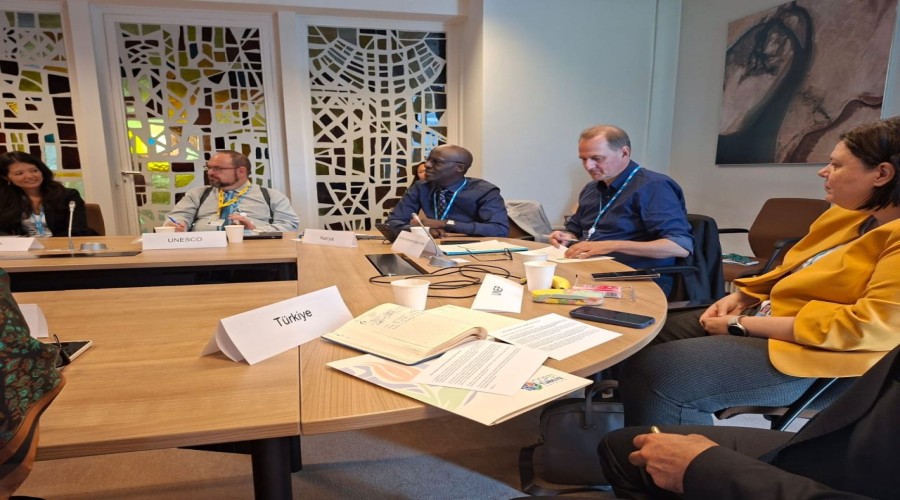
The call was made by Kenya's
Special Envoy on Technology, Ambassador Philip Thigo, during the CODES
Roundtable held on the sidelines of the AI for Good Global Summit 2026 in
Geneva.
Speaking during the
discussions, Thigo said AI governance should increasingly be viewed as
environmental governance as AI systems become embedded across economies and
societies. He noted that governments and stakeholders must consider the full AI
value chain, from the extraction of raw materials and computing infrastructure
to model development, deployment and long-term societal impact.
The discussions built on
Kenya's leadership in advancing the United Nations Environment Assembly
(UNEA-7) Resolution on the Environmental Sustainability of Artificial
Intelligence Systems, highlighting the country's efforts to integrate
sustainability considerations into global AI policy discussions.
Participants identified
several priorities for future action, including integrating AI into Nationally
Determined Contributions (NDCs) to support climate adaptation, biodiversity
conservation, early warning systems and resilience-building initiatives.
The roundtable also
emphasized the need for greater investment in environmental public data,
digital public infrastructure and institutional capacity to enable governments
to use AI for improved public decision-making while ensuring responsible
deployment.
In addition, participants
discussed the importance of developing common evaluation frameworks,
procurement approaches and governance baselines that promote transparency,
accountability and responsible AI implementation across jurisdictions.
The AI for Good Global
Summit, organized by the International Telecommunication Union (ITU), brought
together policymakers, industry leaders, researchers and civil society
representatives to discuss global AI governance, digital inclusion and the
responsible development of emerging technologies.