By: Nana Appiah Acquaye
Kenya is strengthening
efforts to transition public schools to clean cooking solutions through
improved coordination, data-driven planning and increased investment as part of
the country’s ambition to achieve universal access to clean cooking by 2028.
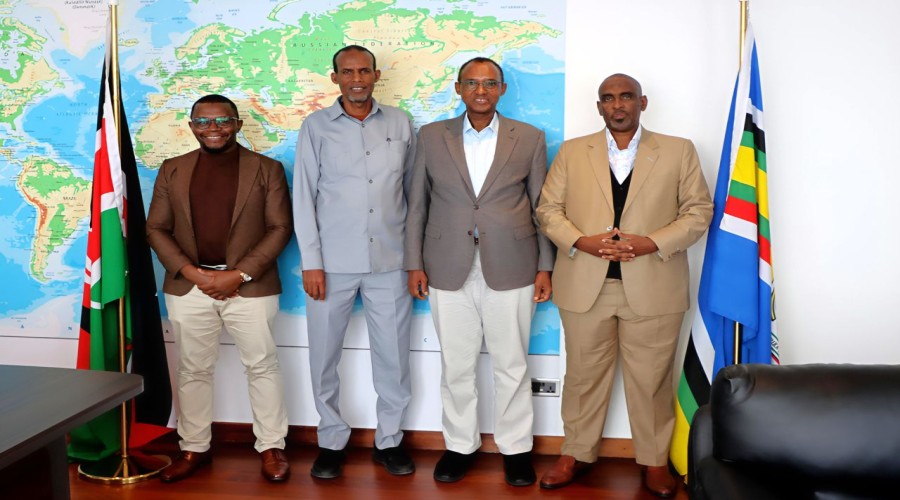
The move follows discussions
between Amb. Ali Mohamed, Mr. Harun Yusuf, Chief Executive Officer of the
National Council for Nomadic Education in Kenya (NACONEK), and Dr. Elyas Abdi,
Director General at the Ministry of Education, Kenya, focused on scaling clean
cooking adoption across educational institutions.
The engagement explored
strategies to develop a publicly accessible national data platform that will
support evidence-based policymaking, attract investment and improve
coordination among government agencies, development partners and other
stakeholders involved in the clean cooking transition.
Participants also discussed
mechanisms to strengthen collaboration and mobilise additional financing to
accelerate implementation of clean cooking solutions in schools across the
country.
A key area of discussion was
the potential use of innovative financing models, including carbon credits
generated through school clean cooking projects. These carbon assets could
support the sustainable expansion of Kenya’s National School Meals Programme
while contributing to broader climate and development goals.
Schools represent the
largest share of institutional cooking demand in Kenya, making their transition
to cleaner cooking technologies a critical component of the country’s clean
energy agenda.
Beyond reducing reliance on
traditional cooking fuels, the initiative is expected to contribute to
healthier learning environments, environmental protection, improved food
systems and climate resilience.
The stakeholders emphasised
that achieving a nationwide shift to clean cooking requires more than
technology alone, with effective coordination, reliable data and sustainable
financing needed to ensure successful implementation at scale.
The collaboration forms part
of Kenya’s broader efforts to advance clean energy access, improve public
services and deliver sustainable solutions that benefit communities across the
country.